
 Cart is empty
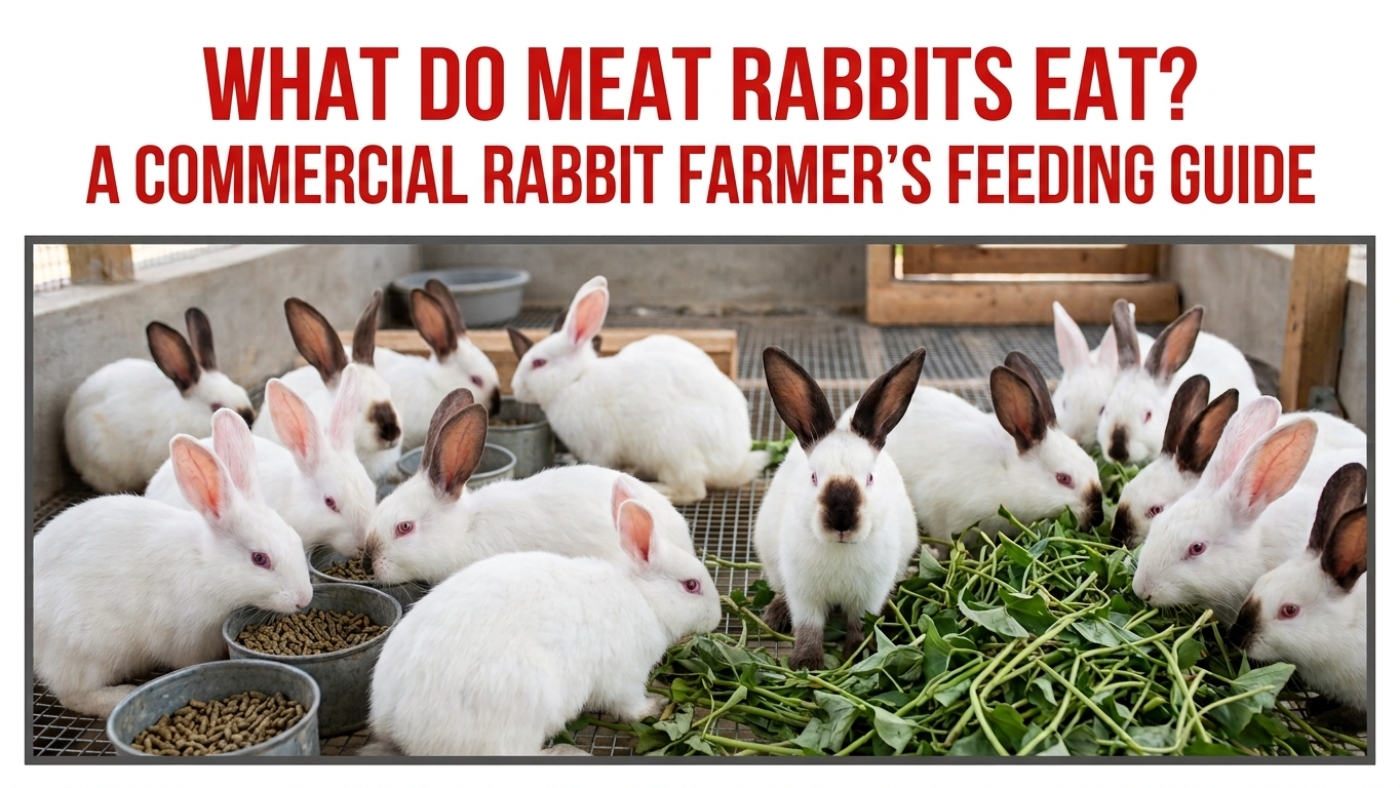
Feed is the biggest running cost in commercial rabbit farming, and it decides how fast your rabbits grow, how healthy they stay and how much profit you make per rabbit.
Meat rabbits do best on a simple, consistent diet: quality pellets in measured amounts, good forage, and clean water at all times. For instance, a study of rabbit production in Abeokuta, Nigeria found that feed accounted for 65.7% of total production costs (excluding family labour).
At Rabbit Choice Farms Ltd., we support commercial rabbit farming through breeding stock, farmer training, rabbit aggregation, processing, and meat distribution. Whether you are starting a small rabbit unit or scaling up production, this guide explains what meat rabbits eat, how much to feed them at different growth stages, and how to estimate feeding costs in Kenya.
What Do Meat Rabbits Eat?
Rabbits have a sensitive digestive system designed to process large amounts of fibre, and their gut relies on beneficial bacteria to break down food and keep digestion healthy. That’s why a meat rabbit’s diet must include enough fibre from quality forage, alongside balanced feed and clean water.
Here’s what to feed your rabbits on a commercial setup:
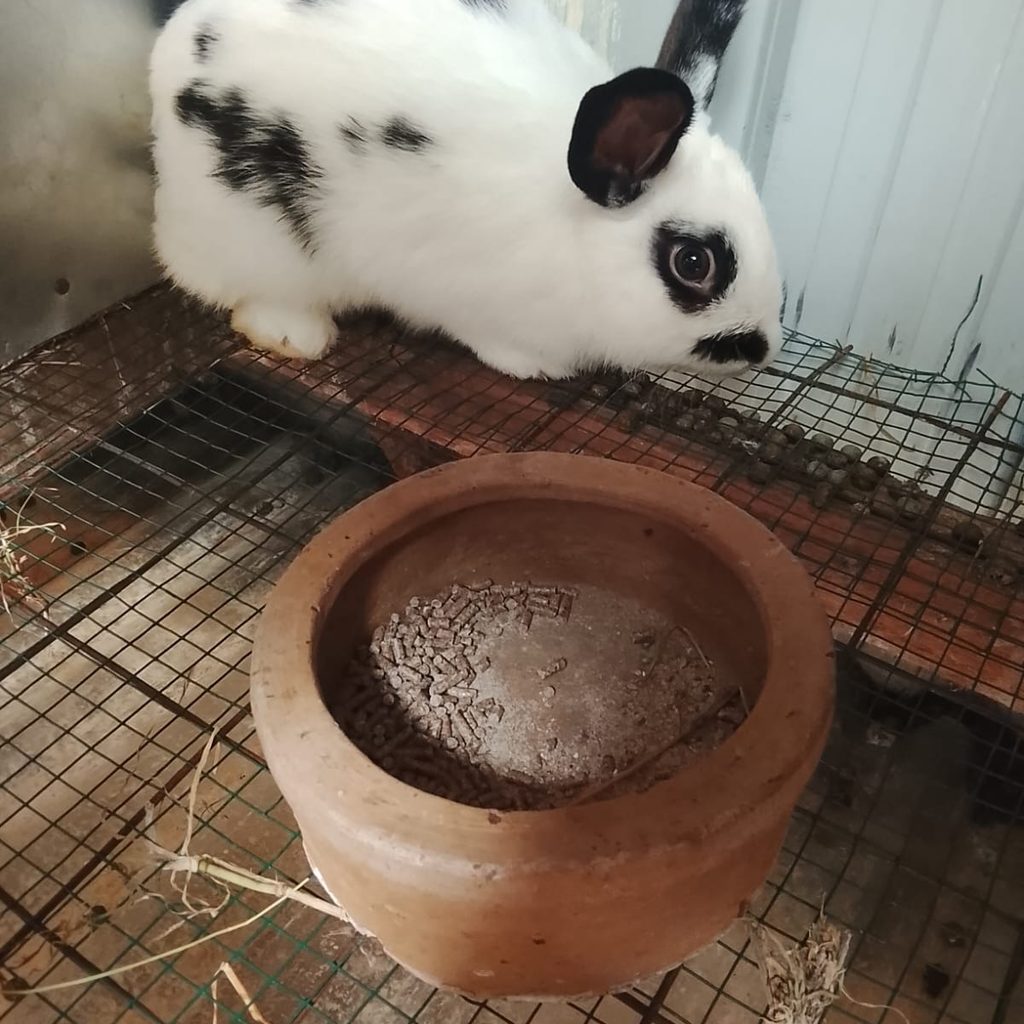
- Commercial rabbit pellets- This is the backbone of a commercial feeding programme. Pellets are balanced for protein, energy, fibre and minerals, so every rabbit gets the same nutrition in every bite. They also make feeding easy to measure and control, which matters when you are managing hundreds of rabbits.
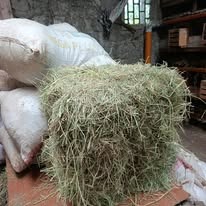
- Hay, grass and other suitable forage- Rabbits need fibre for healthy digestion. Good forage options in Kenya include Boma Rhodes hay, Brachiaria grass and sweet potato vines. Give a handful bundle per rabbit, either tied with binding wire or placed in a hay rack. This keeps the forage clean, off the cage floor and easy to monitor.
- Fresh leaves and locally available feed- Fresh leaves can supplement pellets and cut costs, as long as they are safe, clean and introduced gradually (see the leaves section below).
- Clean drinking water- Water must be available all day, every day. Rabbits that don’t drink enough eat less, grow slowly and become ill quickly.
Image courtesy Pintrest
What Is the Best Feed for Meat Rabbits?
Commercial pellets vs. forage-based feeding
Pellets give predictable growth and are easier to budget for. Forage costs less but varies in quality and nutrient content. The best commercial approach combines both: a measured pellet ration plus forage for fibre.
Can meat rabbits grow on forage alone?
Yes. They can survive on it, but growth is usually slower and less uniform, and rabbits take longer to reach slaughter weight. Forage alone rarely delivers enough energy and protein for commercial production.
What to consider when choosing rabbit feed
Choosing the right rabbit feed involves more than comparing prices. For commercial farmers, feed quality, nutritional content, availability, and cost per kilogram all affect rabbit growth, health, and overall profitability.
- Freshness: no mould, no musty smell, no dampness
- Consistent quality from a reliable supplier
- Pellet price per kilogram
- Whether it suits the rabbit’s stage (kits, weaners, growers, breeders)
- Proper storage in a dry, ventilated place
How Much Should Meat Rabbits Eat Daily?
Feeding weaners and growing rabbits
Pellet quantities increase as the rabbit grows:
| Age (days) | Pellets per rabbit per day |
|---|---|
| Day 1 to 25 (kits) | 10 g |
| Day 26 to 45 | 25 g |
| Day 46 to 115 | 50 to 70 g |
| Day 116 to 150 | 100 g |
Kits start nibbling pellets alongside their mother’s milk, so the first 25 days are about introducing feed, not replacing milk.
Feeding rabbits to slaughter weight
Between day 46 and day 115, increase from 50 g towards 70 g as the rabbit grows and appetite rises. Most commercial rabbits reach market weight within this window, depending on breed, genetics and management. Rabbits kept beyond day 115, such as replacement breeding stock or those finished to a heavier weight, move to about 100 g per day from day 116 to day 150.
Daily feeding routine for a commercial rabbit farm
- Give the measured pellet ration at set times each day, so rabbits settle into a routine.
- Provide a handful bundle of Boma Rhodes hay, sweet potato vines or Brachiaria grass, secured with binding wire or placed in a hay rack.
- Keep clean water available throughout the day.
- Remove uneaten or soiled feed before refilling.
- Check every rabbit’s appetite at each feeding. Reduced eating is often the first sign of illness.
What Leaves and Plants Can Meat Rabbits Eat?
Suitable local leaves and forage for rabbits
- Sweet potato vines
- Brachiaria grass
- Boma Rhodes grass and hay
- Young Napier grass (wilted slightly)
- Lucerne (alfalfa) and desmodium
- Pumpkin and sunflower leaves
- Carrot tops
- Mulberry leaves
Plants and feeds to avoid when feeding rabbits
- Mouldy, rotten or fermented feed
- Kitchen waste and peels
- Green or sprouting potato parts and tomato leaves
- Avocado leaves and peels
- Poisonous plants such as oleander, lantana, castor, datura (thorn apple) and euphorbias
- Forage sprayed with pesticides or from polluted roadsides
- Large amounts of wet, fresh cabbage or lettuce (can cause bloating and diarrhoea)
If you can’t identify a plant with certainty, don’t feed it.
How to introduce fresh leaves safely
Start with small amounts and increase gradually over 5 to 7 days. Wilt very juicy plants overnight before feeding, and always feed grass or leaves that are clean and free of dew or rain. Watch droppings: soft or watery stools mean you should cut back.
How Much Does It Cost to Feed Meat Rabbits in Kenya?
The figures below assume pellets at about KES 58 per kg (KES 2,900 per 50 kg bag as at October 2026) and cover pellets only. Forage costs vary by farm and are extra. Replace the price with your current supplier rate to get your own numbers.
Daily and monthly feed costs per rabbit
| Stage | Daily pellets | Daily cost | Cost per 30 days |
|---|---|---|---|
| Day 1 to 25 | 10 g | about KES 0.58 | about KES 17 |
| Day 26 to 45 | 25 g | about KES 1.45 | about KES 44 |
| Day 46 to 115 | 50 to 70 g | KES 2.90 to 4.06 | KES 87 to 122 |
| Day 116 to 150 | 100 g | KES 5.80 | KES 174 |
Estimated feed costs from weaning to slaughter
From day 26 to day 115, a rabbit eats roughly 4 to 5.4 kg of pellets, costing about KES 232 to 313. Over the full 150 days, total pellet use is about 7.75 to 9.15 kg, or roughly KES 450 to 531.
Feed budgeting for 50, 100 and 500 rabbits
Weaning (day 26) to day 115:
| Number of rabbits | Pellets needed | Estimated cost |
|---|---|---|
| 50 | 200 to 270 kg | KES 11,600 to 15,660 |
| 100 | 400 to 540 kg | KES 23,200 to 31,320 |
| 500 | 2,000 to 2,700 kg | KES 116,000 to 156,600 |
Add a 5 to 10 percent buffer for wastage and price changes.
Common Rabbit Feeding Mistakes to Avoid
- Feeding mouldy or poor-quality feed. Mould causes digestive problems and can kill rabbits. Store feed dry and discard anything damp or musty.
- Changing feed suddenly. Abrupt changes upset the gut. Mix old and new feed over 5 to 7 days.
- Providing insufficient water. Water should never run out. Check drinkers daily, and more often in hot weather.
- Relying on unsuitable forage or unbalanced diets. Poor forage alone slows growth. Balance forage with a measured pellet ration.
Frequently Asked Questions About Feeding Meat Rabbits
What is the best feed for meat rabbits in Kenya?
A quality commercial pellet fed in measured daily amounts, plus Boma Rhodes hay, sweet potato vines or Brachiaria grass, and clean water.
Can meat rabbits eat grass only?
They can survive on it, but growth is slower and less uniform. For commercial production, pellets should be part of the diet.
Do meat rabbits need commercial pellets?
Not strictly, but pellets give the most consistent growth and the easiest cost control, which is why most commercial farms use them.
How long does it take to raise a meat rabbit to slaughter weight?
Typically around 3 to 4 months, depending on breed, feed and management. Well-fed rabbits on a good programme reach market weight within the day 46 to 115 growing window.
How can I reduce rabbit feeding costs on a commercial farm?
- Feed measured rations instead of free-feeding pellets
- Use safe, home-grown forage such as sweet potato vines and Brachiaria
- Buy pellets in bulk and store them properly
- Avoid wastage with hay racks and clean feeders
- Cull poor performers that eat a lot but grow slowly
Conclusion
Good rabbit feeding is a balance: enough nutrition for fast, healthy growth without letting feed costs eat your margin. Measured pellet rations, clean forage and constant water will take you most of the way.
At Rabbit Choice Farms Ltd, we support Kenya’s rabbit value chain through commercial breeding stock, farmer training, and rabbit meat aggregation and distribution. We also buy rabbits from farmers under our sourcing arrangements to supply the growing demand for rabbit meat.
Visit our office on Total Ruaraka, Thika Road, Nairobi. You can also call us on +254725626955/ +254752683530
Add a Comment