
 Cart is empty
Rabbit farming is becoming one of the fastest-growing livestock enterprises in Kenya and across Africa. We recently held a virtual training for rabbit farmers around the world, and got over 250 registered farmers, with the Facebook post reaching over 20,000 people.
With increasing demand for healthy, lean rabbit meat, many farmers are searching for the best rabbit breeds for meat production.
However, success in rabbit farming begins with choosing the right breed. Different breeds have different growth rates, meat yield, temperament, and adaptability.
In this guide, we explain the most productive rabbit breeds in Kenya, their history, characteristics, and growth performance, and how farmers can choose the best breeding stock for profitable meat production.
If you are starting or expanding a rabbit farm, this article will help you make practical decisions that improve productivity and profitability.
Why Choosing the Right Rabbit Breed Matters
Not all rabbits are suitable for commercial meat production.
The breed you choose will affect:
- Growth rate
- Feed efficiency
- Litter size
- Disease resistance
- Market weight
For commercial farming in Kenya, farmers usually prefer specialized meat breeds or hybrid rabbits because they grow faster and produce more meat.
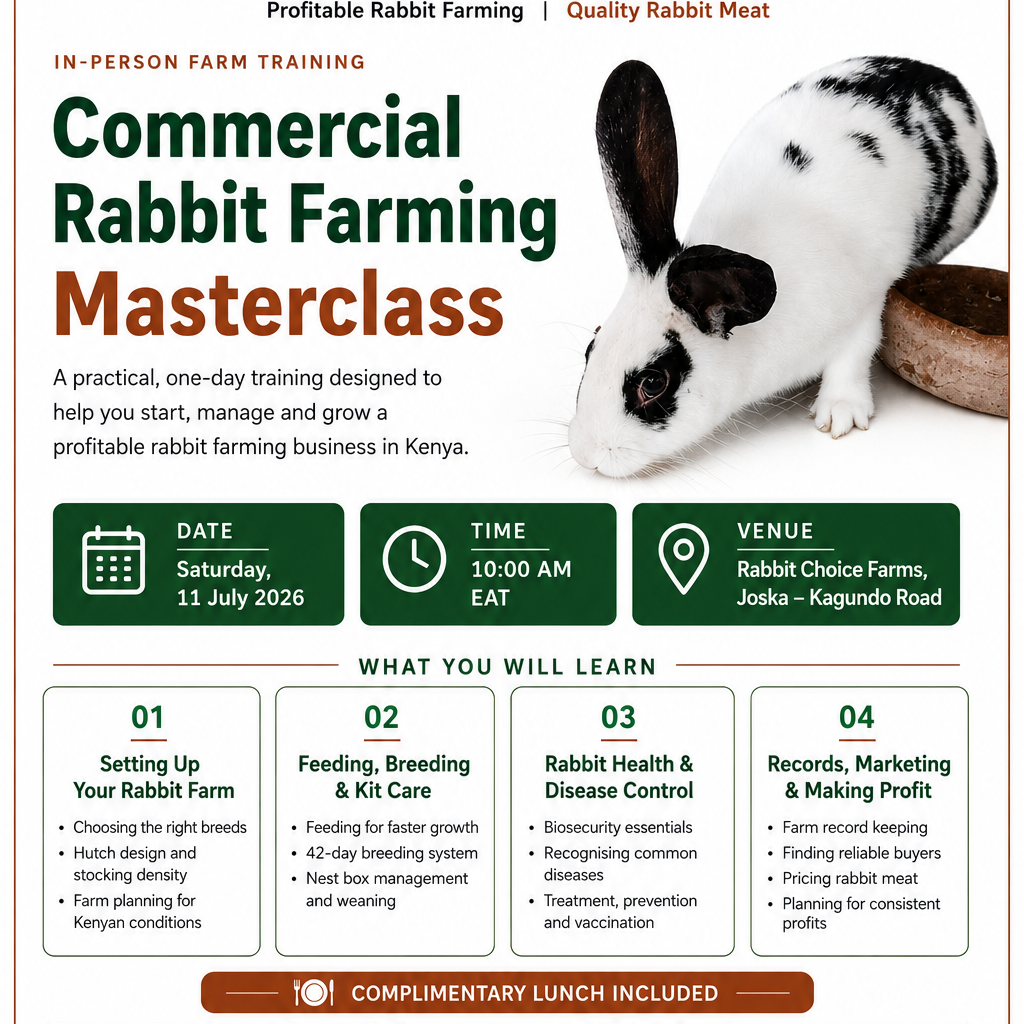
At Rabbit Choice Farms Ltd, we help farmers succeed through:
- Rabbit farming training
- Supply of high-quality rabbit breeders
- Rabbit cage construction
- Contract farming programs
Best Rabbit Breeds for Meat Production in Africa
Below are the most popular and productive rabbit breeds raised by farmers across Kenya and beyond.
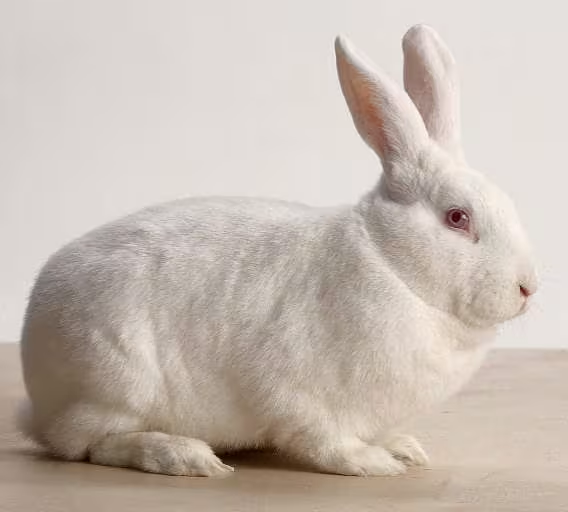
1. New Zealand White
Despite its name, the New Zealand White did not originate in New Zealand. The breed was developed in the United States in the early 1900s by selectively breeding rabbits for rapid growth and meat production.
Over time, it became one of the most widely used commercial meat rabbit breeds in the world. Today, it is also the most common breed used in Kenyan rabbit farms.
Physical Characteristics
- Color: Pure white fur
- Eyes: Pink or red
- Body: Large, muscular body
- Weight: 4–5 kg when fully grown
- Fur: Dense and smooth
The white fur makes this breed ideal for meat processing because the carcass appears clean after slaughter.
Temperament
- Calm and easy to handle
- Good mothering ability
- Adaptable to different environments
These qualities make the New Zealand White ideal for both beginner and commercial farmers.
Growth Rate
- Birth weight: 40–60 grams
- 8 weeks: about 2 kg
- Market weight: 2.5–3 kg in 10–12 weeks
Because of its fast growth and high productivity, this breed is widely used in commercial breeding programs across the world.
2. California White
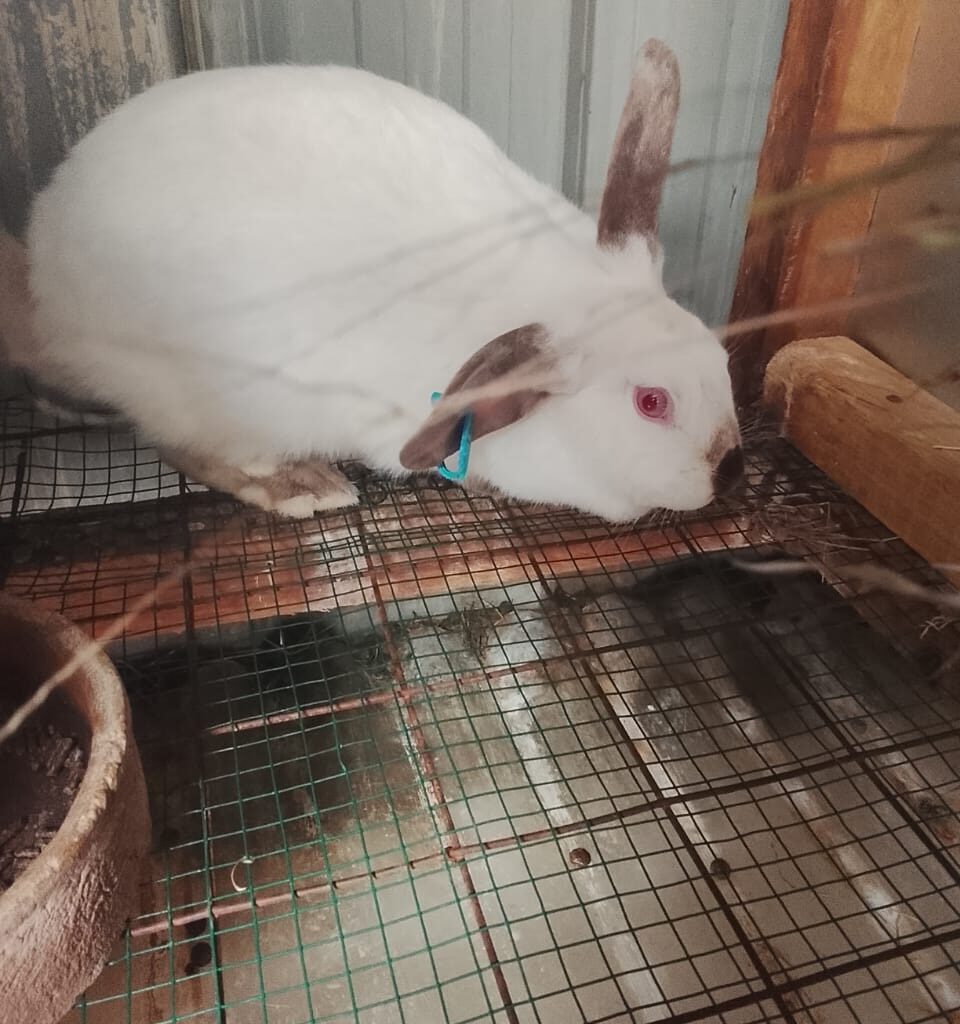
The California White breed was developed in California, USA in the 1920s by crossing New Zealand White, Himalayan, and Chinchilla rabbits.
The goal was to create a rabbit that had:
- Excellent meat quality
- Strong bones
- High growth performance
Today, it is considered one of the best meat rabbit breeds in the world.
Physical Characteristics
- Color: White body
- Markings: Black ears, nose, feet, and tail
- Body shape: Compact and muscular
- Weight: 4–4.5 kg when mature
These distinctive black markings make the California White easy to identify.
Temperament
- Calm and manageable
- Good mothers
- Adapt well to cage systems
This breed performs very well in intensive commercial rabbit farming systems.
Growth Rate
- Market weight: 2.5–3 kg in about 10–12 weeks
California White rabbits are often crossed with New Zealand Whites to produce high-performing hybrid meat rabbits.
3. Flemish Giant
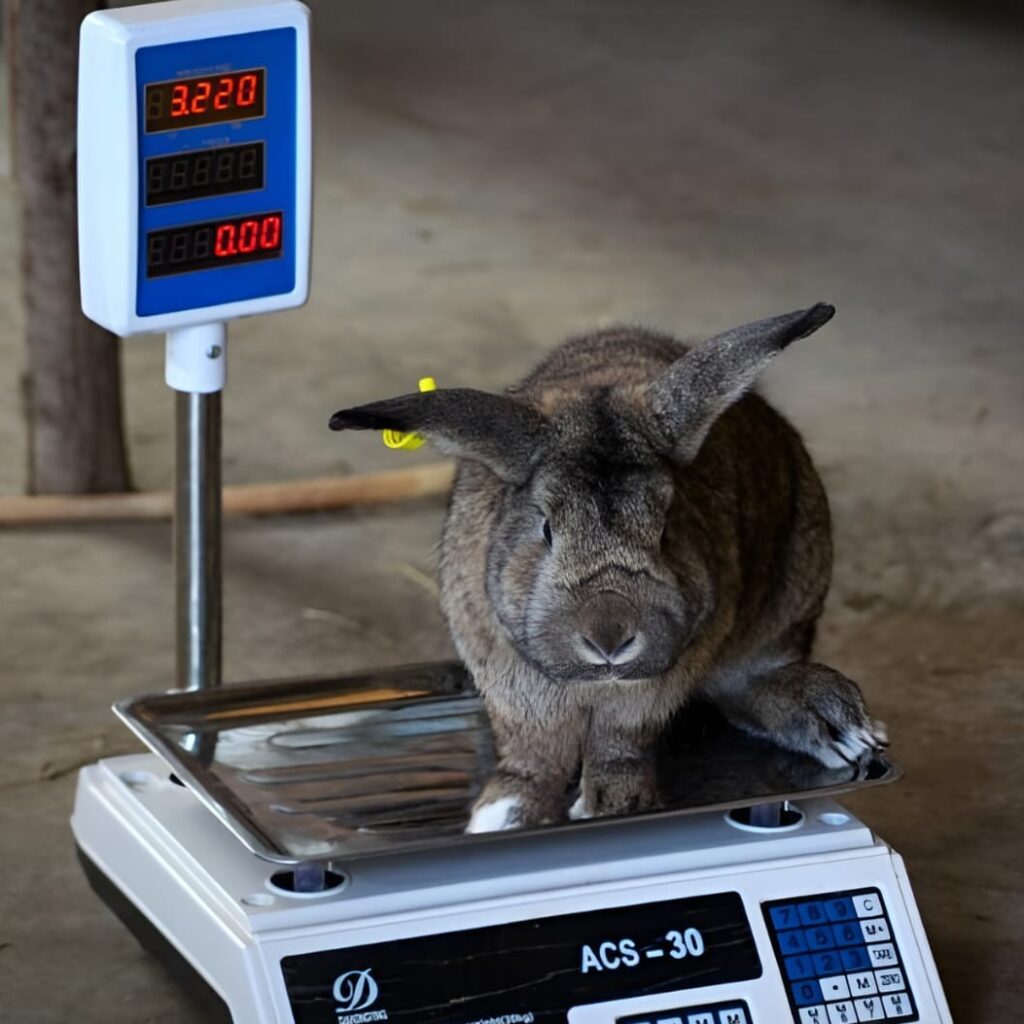
The Flemish Giant is one of the oldest and largest rabbit breeds in the world. It originated in Belgium during the 16th century, where it was developed as a large meat and fur rabbit.
Because of its size, it became popular worldwide and is often referred to as the “King of Rabbits.”
Physical Characteristics
- Color: Can be grey, black, white, blue, or sandy
- Body: Very large and long
- Weight: 6–8 kg or more when mature
- Ears: Long and upright
It is significantly larger than most commercial rabbit breeds.
Temperament
- Very calm and gentle
- Easy to handle
- Sometimes kept as pets due to their friendly nature
Growth Rate
Although they grow large, Flemish Giants grow slower than specialized meat breeds.
- Market weight: about 3–4 kg in 14–16 weeks
For this reason, many farmers use Flemish Giants mainly for crossbreeding to improve size in hybrid rabbits.
4. Chinchilla Rabbits
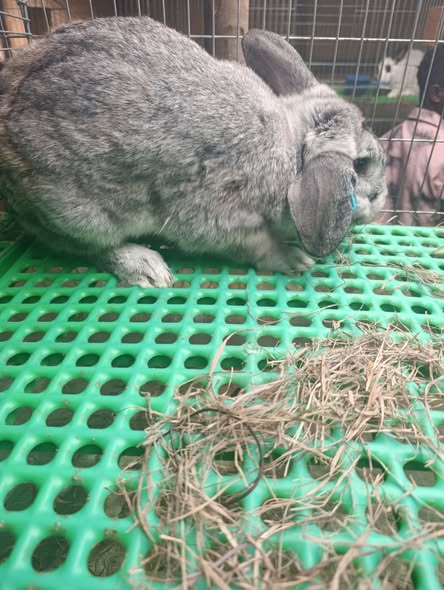
Chinchilla rabbits were first developed in France around 1919. The breed was named after the chinchilla animal because of its beautiful grey fur that resembles the animal.
They quickly became popular in Europe and America for both meat and fur production.
Physical Characteristics
- Color: Grey with black and white shading
- Body: Medium to large frame
- Weight: 4–5 kg when mature
- Fur: Thick and soft
The unique coat color makes Chinchilla rabbits attractive and valuable.
Temperament
- Active and alert
- Hardy and adaptable
- Good for both cage and backyard systems
They adapt well to different climatic conditions in Kenya.
Growth Rate
- Market weight: 2.3–2.8 kg
Chinchilla rabbits are commonly used in small-scale rabbit farms across Kenya.
Other Rabbit Breeds That Also Perform Well in Africa
Besides the major commercial meat breeds, several other rabbit breeds also perform well in African farming systems, especially for crossbreeding and small-scale profitable agribusiness projects.
Checkered Giant
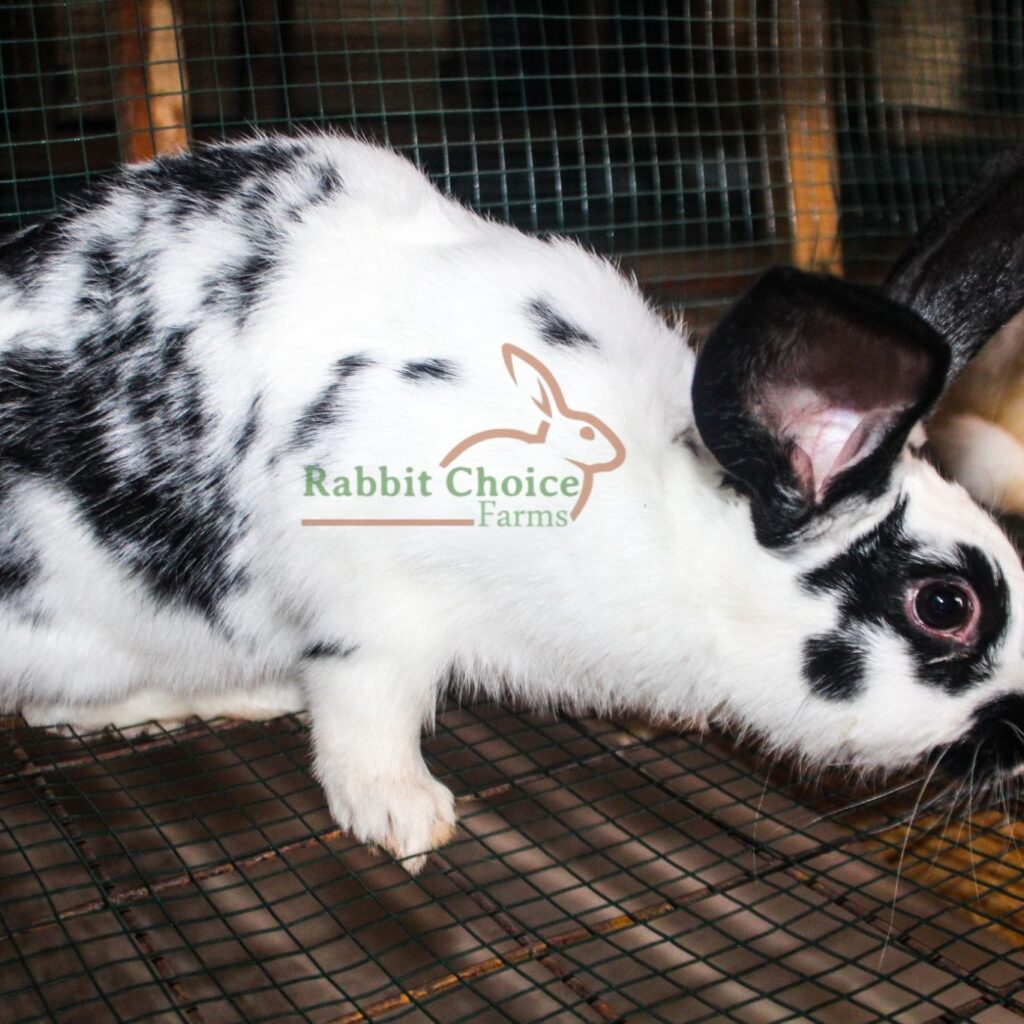
- Origin: Europe (Germany and Belgium)
- Color: White body with black or blue markings
- Weight: 4–6 kg
- Temperament: Active and energetic
Checkered Giants are often used in crossbreeding programs to increase body size and meat yield.
Dutch Rabbit
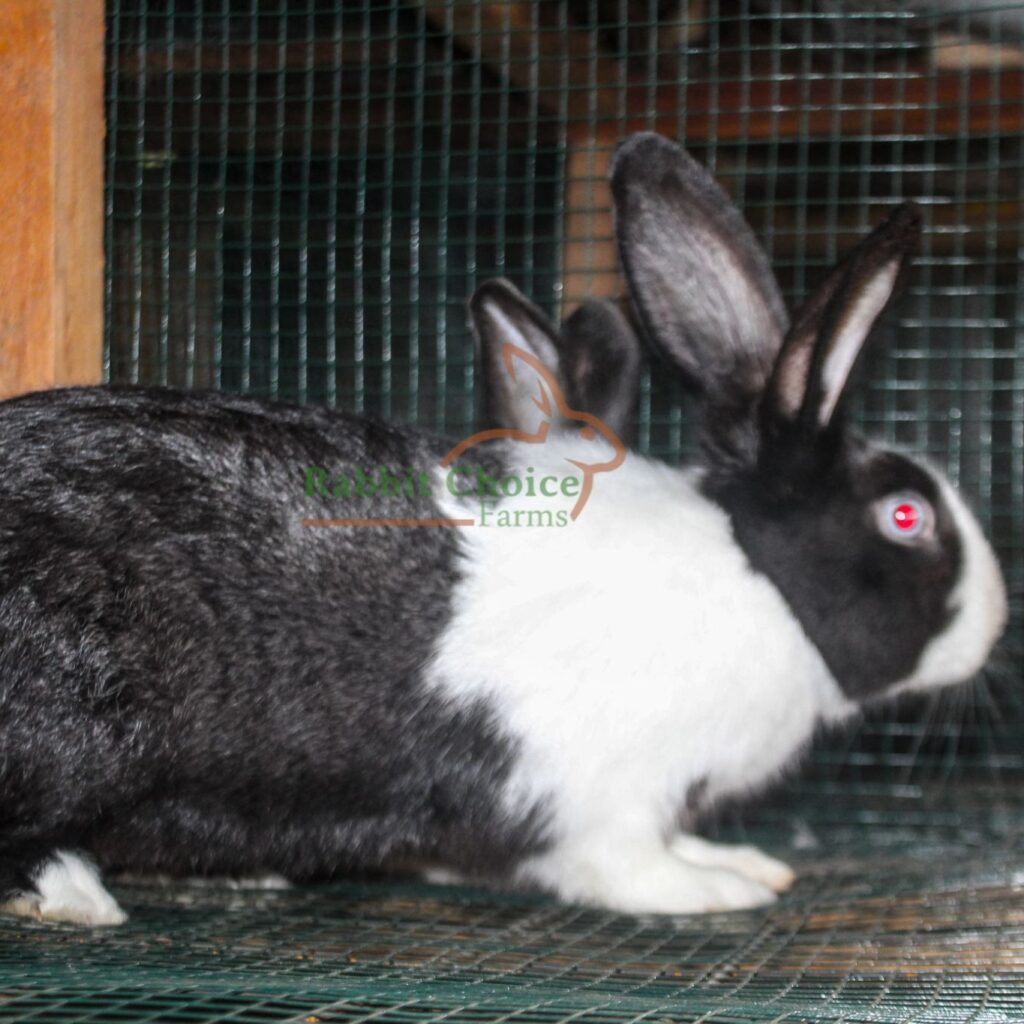
- Origin: England
- Color: Distinctive black and white pattern
- Weight: 2–2.5 kg
- Temperament: Friendly and calm
Although smaller than typical meat breeds, Dutch rabbits are common in small-scale rabbit farming enterprises across Africa.
Silver Marten
- Origin: United States
- Color: Black, blue, chocolate, or sable with silver underside
- Weight: 3–4 kg
- Temperament: Active but manageable
Silver Marten rabbits perform well in small to medium-scale farms and can also be used in crossbreeding programs.
Is Rabbit Farming Profitable?
Rabbit farming is increasingly becoming a profitable agribusiness opportunity across Africa and East Africa.
Compared to many livestock enterprises, rabbits offer several advantages:
- Fast reproduction rates
- Low startup capital
- Small space requirements
- High-quality meat demand
- Short production cycles
With proper management, a farmer can raise rabbits for both breeding stock and meat production, creating multiple income streams.
Through Rabbit Choice Farms Ltd, farmers can access the knowledge, breeding stock, and support needed to build a successful rabbit farming agribusiness.
Where Can You Buy Quality Rabbit Breeders?
Rabbit Choice Farms Ltd supplies high-quality rabbit breeders suitable for commercial meat production across East Africa.
One of the biggest mistakes farmers make is buying rabbits from unverified sources without breeding records.
Quality breeding rabbits should come from farms that maintain:
- Controlled breeding programs
- Healthy genetics
- Proper feeding systems
- Performance records
We also support farmers with:
- Rabbit farming training
- Rabbit cage construction
- Contract farming opportunities
- Market access for rabbit meat
- Our goal is to help farmers build sustainable and profitable rabbit farming businesses.
How to Choose Good Breeding Rabbits
Selecting the right breeding rabbits is important for building a productive and profitable rabbit farm. Good breeding stock leads to better growth rates, healthier litters, and improved meat production.
When choosing breeding rabbits, consider the following:
- Good health – Rabbits should have bright eyes, a clean nose, smooth fur, and active behavior. Avoid rabbits that appear weak or sick.
- Strong body structure – Choose rabbits with a wide chest, strong hind legs, and good muscle development for better meat production.
- Proven breeding performance – Buy rabbits from farms that keep breeding records and maintain strong genetics.
- Proper breeding age – Ideal breeding age is 6–7 months for females (does) and 6–8 months for males (bucks). Breeding too early can reduce productivity.
Frequently Asked Questions
What feeds help rabbits grow faster to slaughter weight?
Rabbits grow faster when they receive a balanced diet with enough fiber, protein, and energy.
A proper feeding program includes:
- Hay – the main fiber source for digestion
- Commercial rabbit pellets – provide protein and nutrients
- wilted forage such as sweet potato vines, lucerne, or grasses
- Clean drinking water at all times
Proper feeding combined with good genetics helps rabbits reach 2.5–3 kg market weight in about 12–16 weeks.
What do I need to start a rabbit farm?
Starting a rabbit farm requires a few essential things:
- Quality breeding rabbits
- Proper cages or housing
- Reliable feed supply
- Clean water
- Basic management knowledge
For commercial rabbit farming, you can start with 10 does and 2 bucks and then expand gradually as the farm grows.
Can rabbits be fed entirely with farm-grown feeds?
Yes, many farmers reduce feeding costs by growing their own rabbit feeds.
Common crops grown for rabbit feeding include:
- Lucerne (alfalfa)
- Napier grass
- Sweet potato vines
- Desmodium
- Vegetable leaves
However, for maximum growth and productivity, many farmers still supplement with rabbit pellets to balance nutrients.
What is the best housing system for rabbits?
Most commercial farms use raised cage systems because they:
- Improve hygiene
- Reduce disease risk
- Make feeding and cleaning easier
- Improve growth performance
We recommend building enough hutches to fit the breeders and 2 sets of kits from the onset of your project. Ideally, 3 cages per female and 1 per male. Each cage should be 2.5 feet by 2 feet, width and height.
At Rabbit Choice Farms Ltd, we also help farmers with rabbit cage construction designed for efficient commercial farming.
How can farmers avoid inbreeding in rabbit farms?
Inbreeding occurs when rabbits from the same family line breed repeatedly.
To prevent this:
- Keep proper breeding records
- Replace breeding bucks regularly
- Buy new breeding stock from reliable farm
- Avoid mating siblings
Buying breeders from farms with controlled breeding programs, such as Rabbit Choice Farms Ltd, helps maintain strong genetics.
How can rabbit farmers find a market for rabbit meat?
Rabbit meat demand is growing in many parts of East Africa, especially in urban areas, restaurants, and health-conscious markets.
Farmers can sell rabbits through:
- Direct farm sales
- Local butcheries
- Restaurants and hotels
- Farmer groups and cooperatives
At Rabbit Choice Farms, we buy rabbits. If you have some good rabbits that are mature and ready for selling, contact us or visit our office in Nairobi. Our office is on Thika Road, Total Ruaraka next to the Queen of Apostles Catholic Church.
Add a Comment