At Rabbit Choice Farms, we raise, process, and sell fresh rabbit meat to customers across Kenya, so we get this question a lot from first-time buyers: is rabbit meat white or red meat?
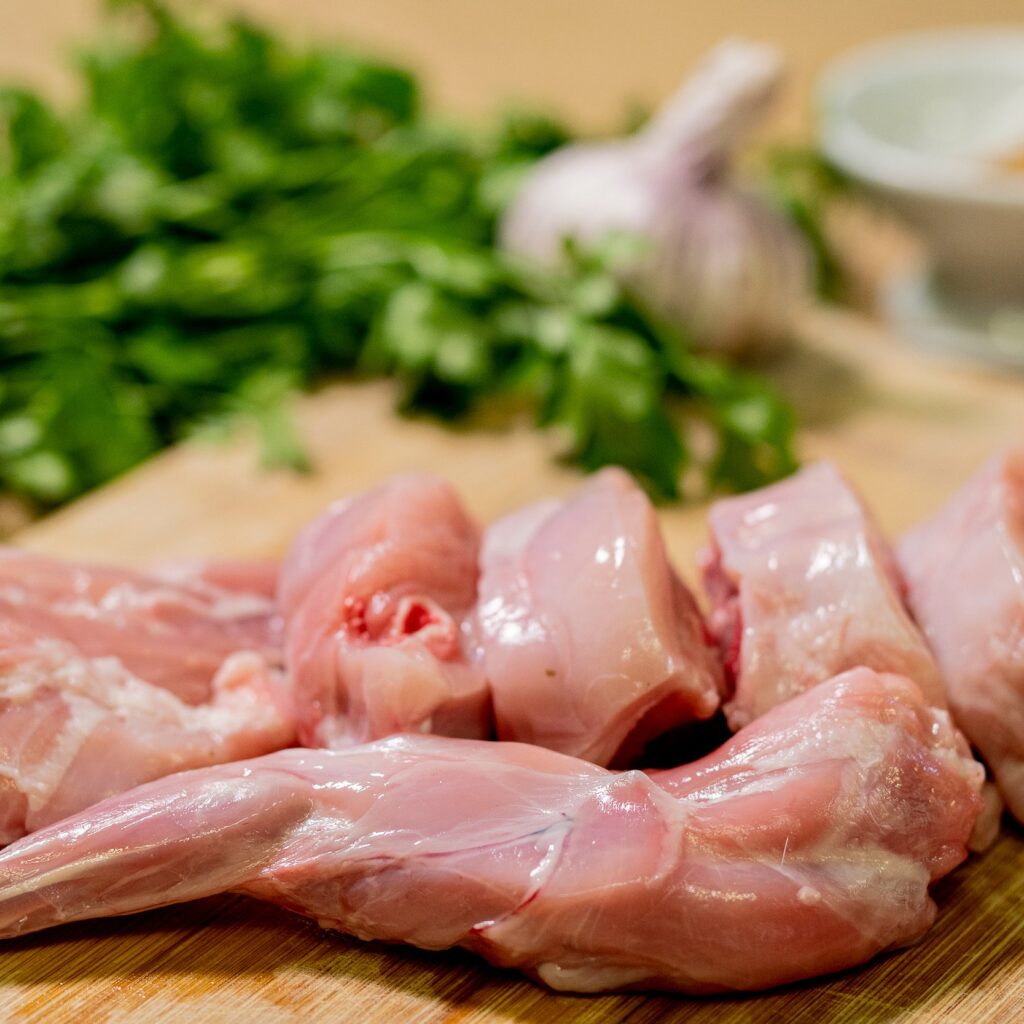
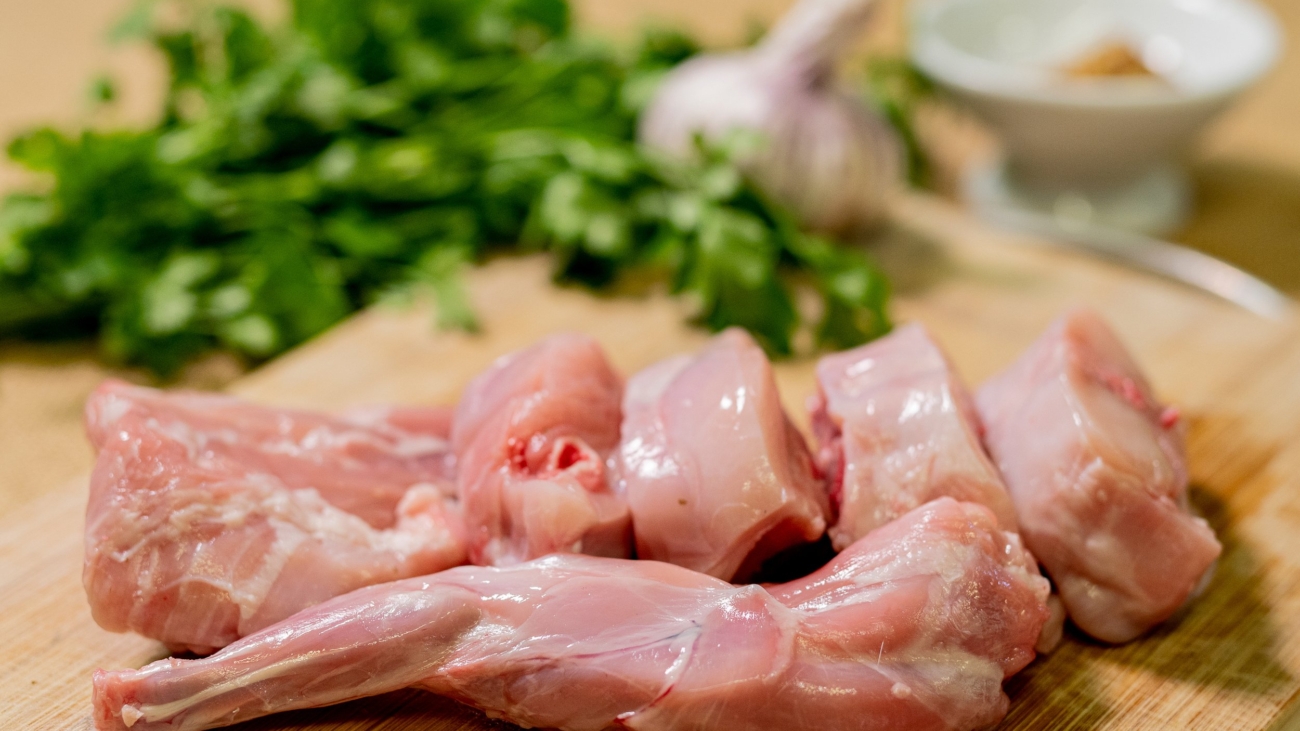
Rabbit meat is classified as white meat. It’s pale pink to white in colour, similar in appearance to chicken breast, and it’s grouped with white meats by nutritionists because of its low fat and low myoglobin content, not because of the animal it comes from.
Meat colour comes down to myoglobin, the protein in muscle tissue that stores oxygen and gives meat its red or pink pigment. Animals with muscles built for sustained activity (cattle, for example) have high myoglobin content, which is why beef is dark red. Rabbits, like chickens, have muscle fibres suited to short bursts of activity rather than continuous exertion, so their myoglobin levels, and therefore their meat colour, stay low.
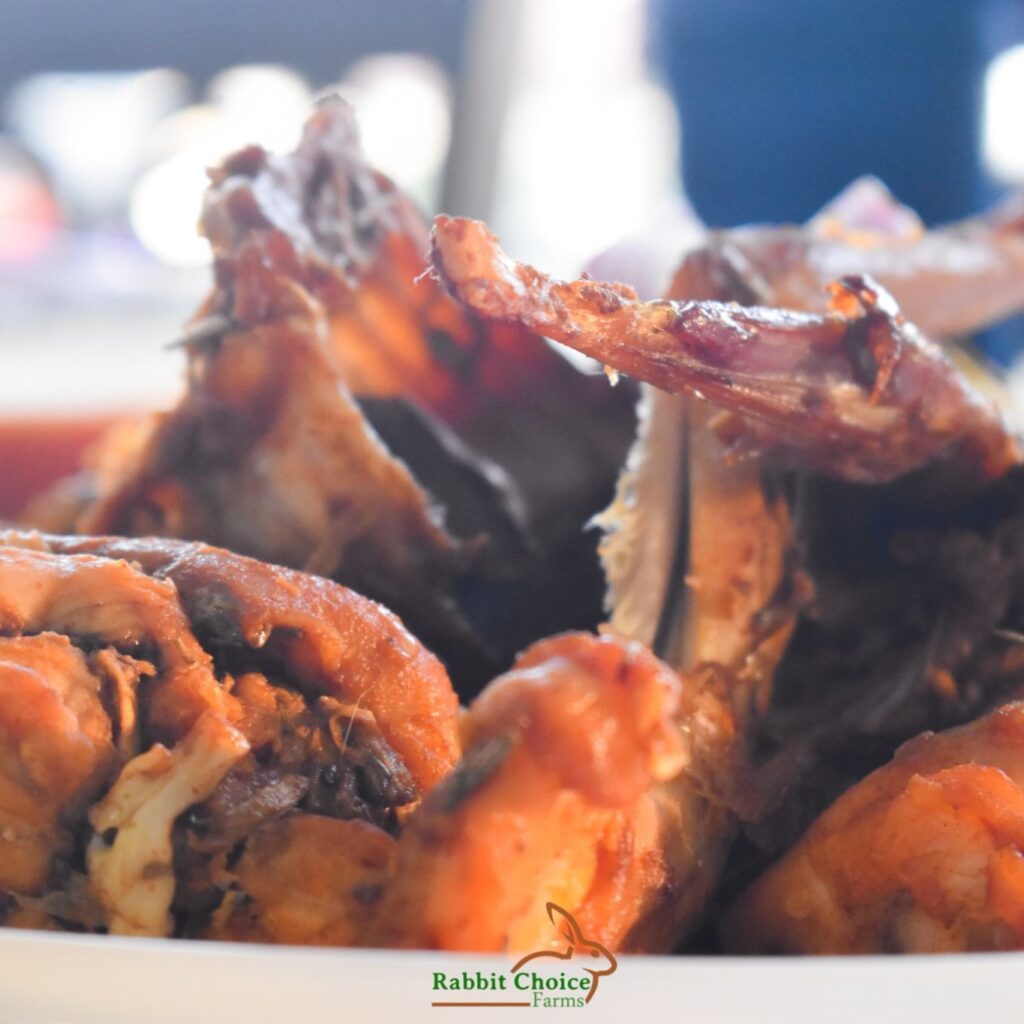
This is also why rabbit meat cooks up pale, much like chicken, and why it’s often compared directly to chicken breast in texture and appearance rather than to red meats like beef or lamb.
What Is Rabbit Meat Called?
Rabbit meat doesn’t have a separate culinary name in English. It’s simply called rabbit meat or rabbit. On some restaurant menus, particularly French-influenced ones, you may see it listed as “lapin” (the French word for rabbit), but this is a menu convention rather than a different cut or product.
Rabbit Meat vs. Chicken vs. Beef: A Quick Comparison
Is rabbit meat white or red meat? Rabbit meat is white meat. It’s pale in colour and low in myoglobin, placing it in the same category as chicken rather than red meats like beef or lamb.
What is the meat of a rabbit called? It’s called rabbit meat, or simply “rabbit.” On some menus it may appear as “lapin,” the French term.
Is rabbit meat similar to chicken? Yes. In colour, texture, and fat content, rabbit meat is often compared directly to chicken breast, though many describe its flavour as slightly richer.
Does rabbit meat have less fat than red meat? Generally, yes. Rabbit meat is leaner than most cuts of red meat, which is one reason it’s often recommended as a lower-fat protein source.
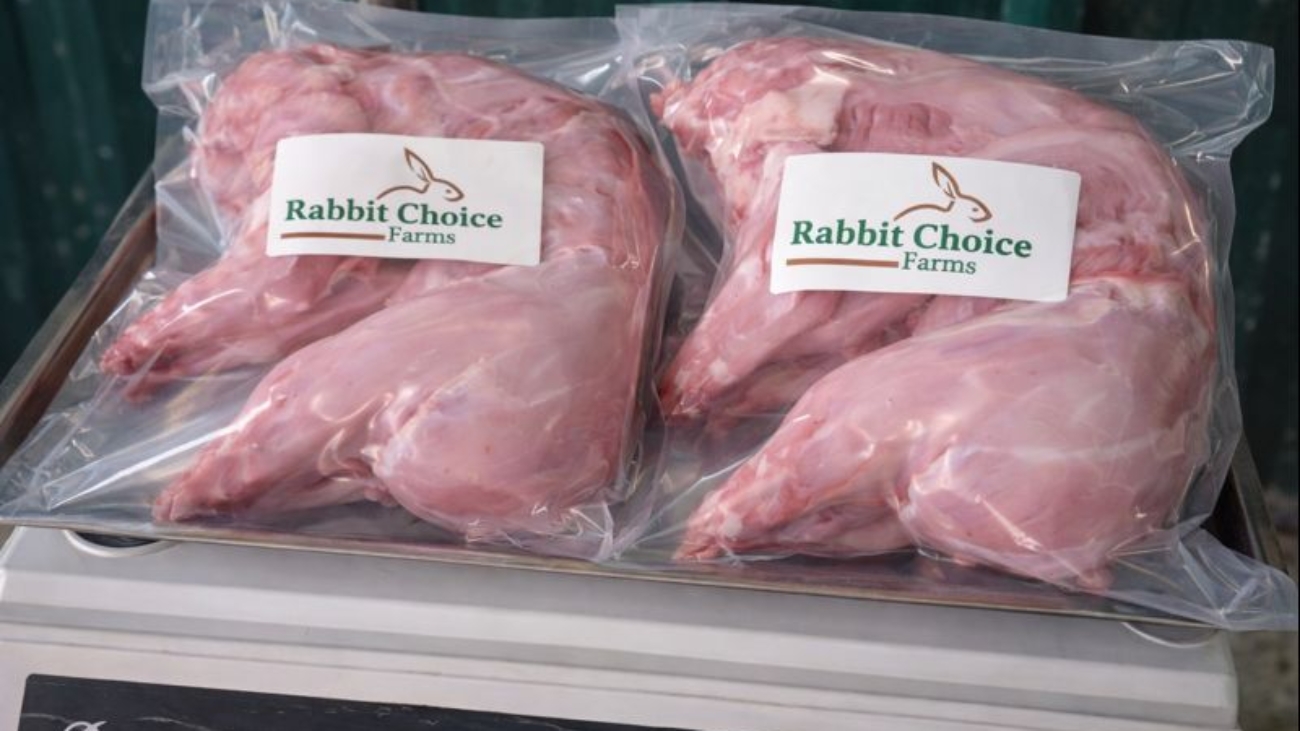
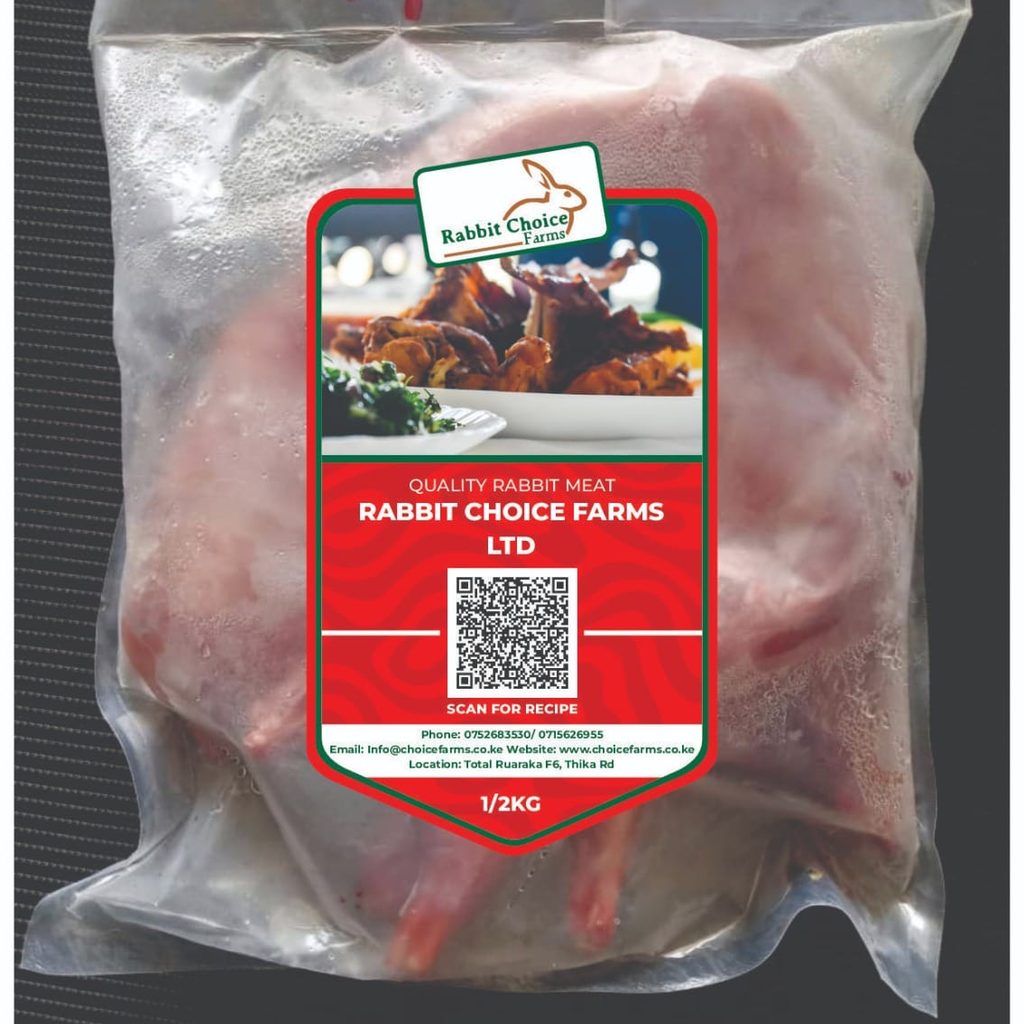
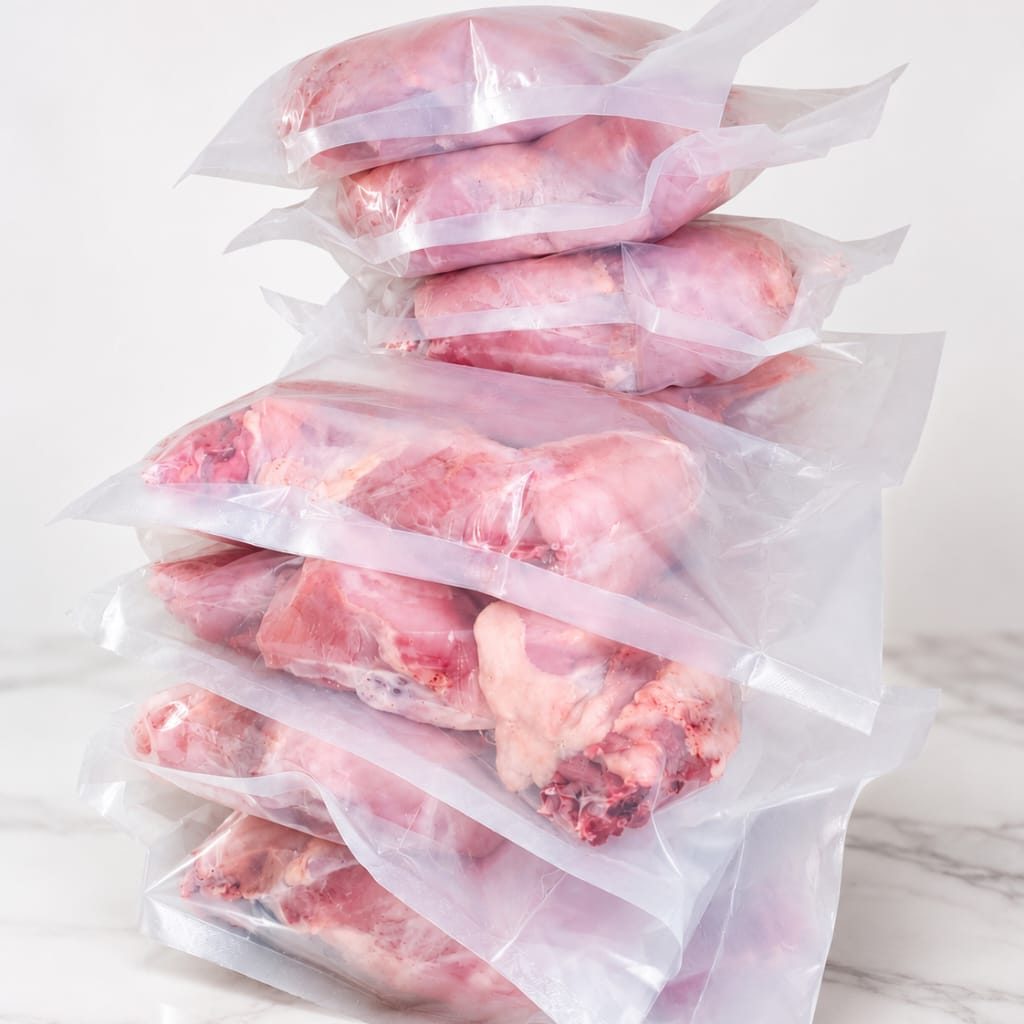
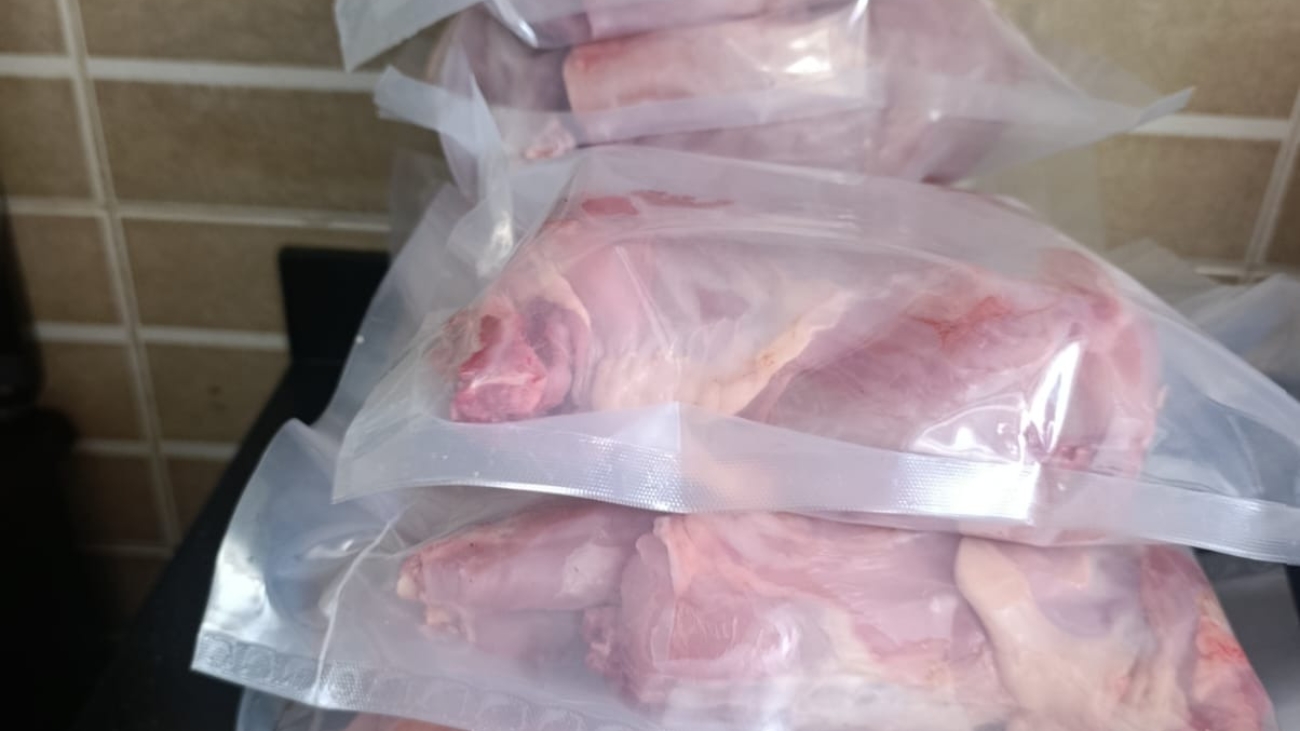
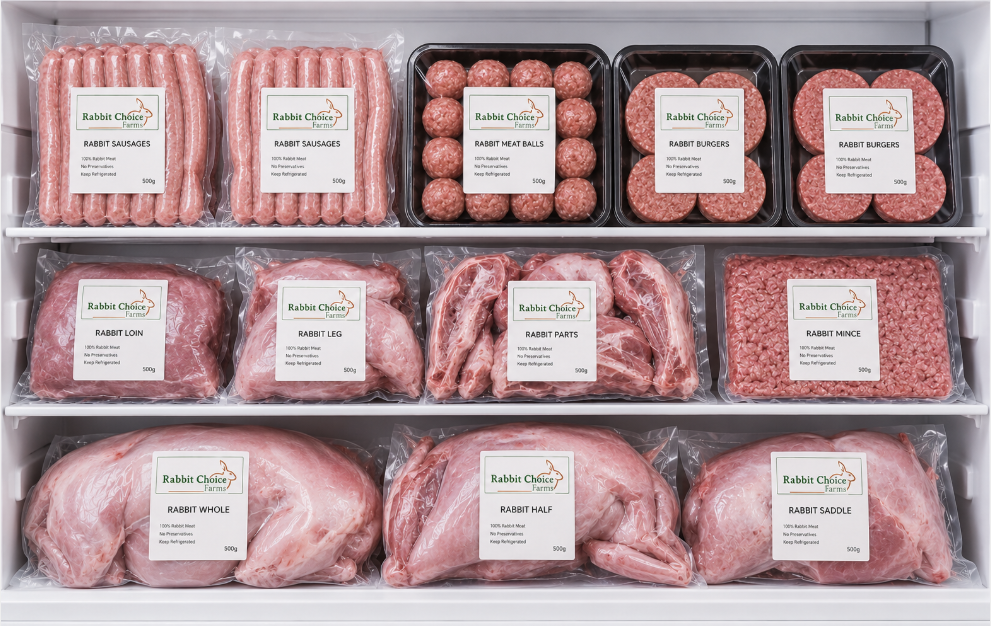
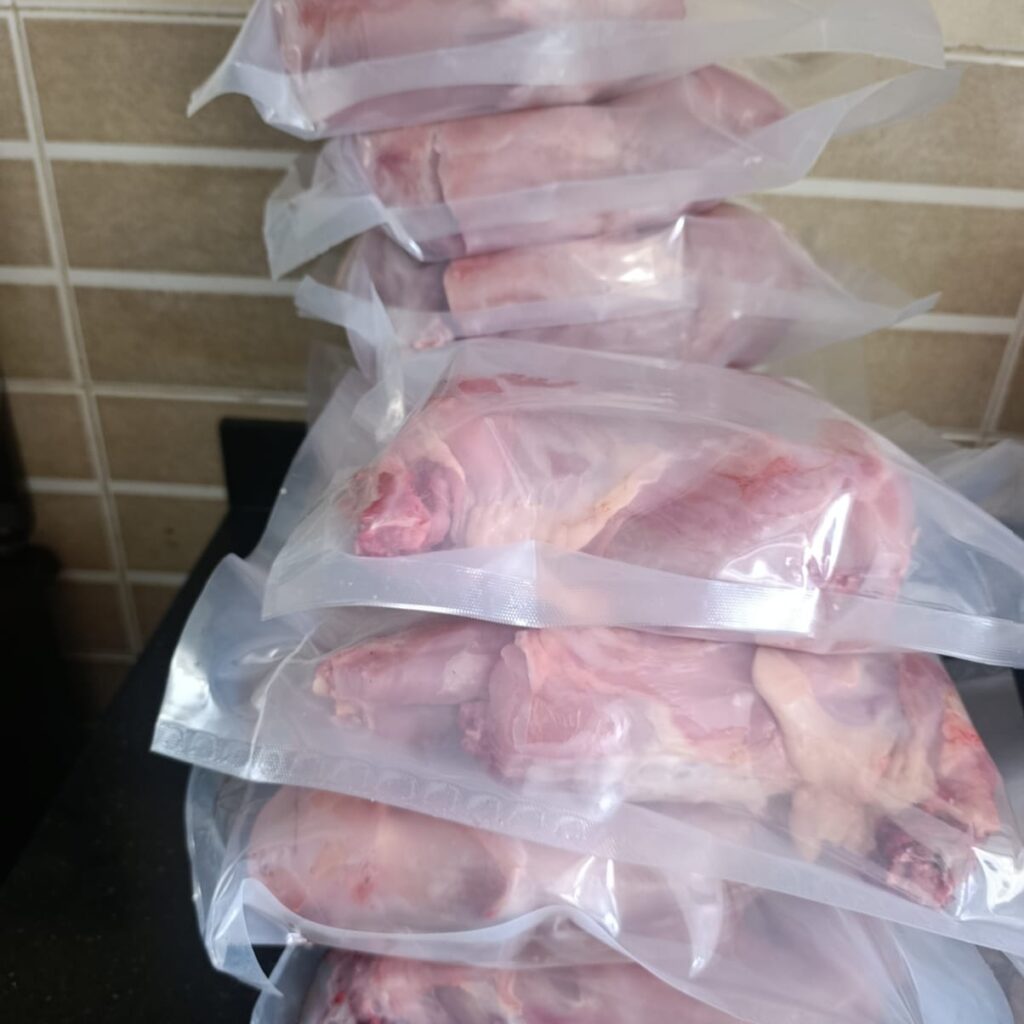
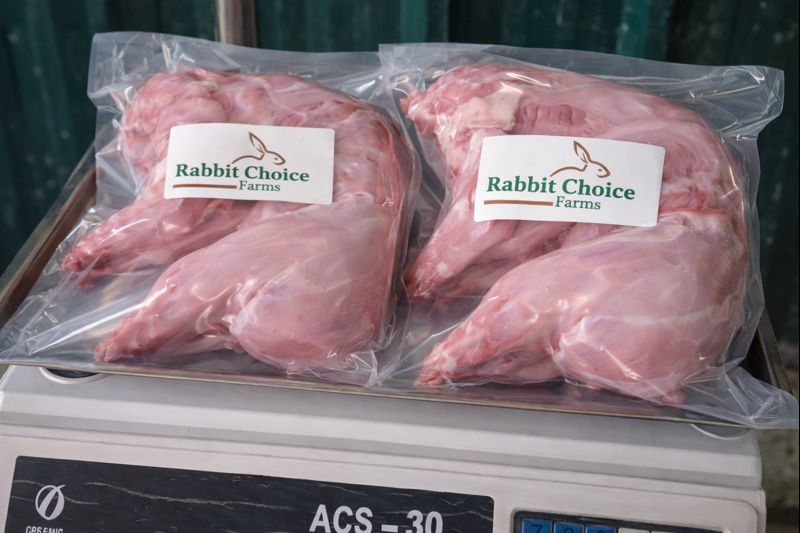
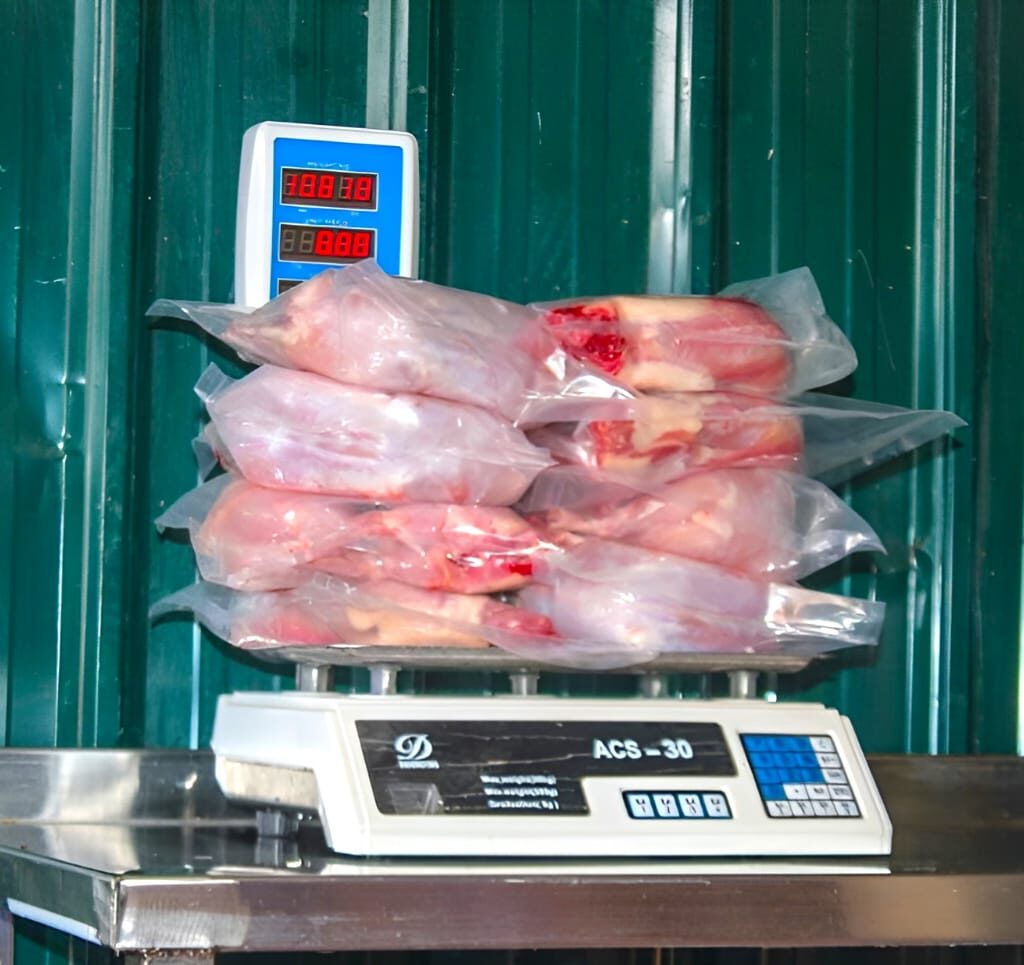
You can get rabbit meat at Rabbit Choice Farms Ltd. We sell premium rabbit meat, individually packed in food- grade packaging.
If you’ve searched for “rabbit meat Nairobi” or “rabbit market near me” and come up short, you’re not alone. Rabbit meat is still a specialty product in Kenya, most butcheries and supermarkets don’t stock it, which makes finding a reliable source harder than it should be. This guide covers where to buy it in Nairobi, what it costs right now, and how to order, whether you need a single whole rabbit for dinner or a weekly wholesale supply for your restaurant.
What Is The Current Rabbit Meat Price in Nairobi (2026)
Rabbit meat at Rabbit Choice Farms currently retails at Ksh 950 per kg. Based on that rate, here’s roughly what to expect for whole rabbits by size:
Size
Weight
Estimated Price
Small
1 – 1.2 kg
Ksh 950 – 1,140
Medium
1.3 – 1.5 kg
Ksh 1,235 – 1,425
Large
1.6 – 2 kg
Ksh 1,520 – 1,900
We also sell cuts — fillet/boneless, legs, and mince — for those who want convenience over a whole bird. See exact, up-to-date pricing for every cut on our shop page.
Wholesale prices are available for bulk buyers — restaurants, hotels, butcheries, and institutions ordering in volume get a discounted rate off the retail price. Contact us directly for a wholesale quote; pricing depends on order size and delivery frequency.
Where to Buy Rabbit Meat in Nairobi
You can buy rabbit meat at Rabbit Choice Farms is based at:
Ruaraka Mall, First Floor, Thika Road (Opposite Safari Park Hotel), Nairobi
You can buy in person at our Ruaraka location, or order online through our shop for delivery across Nairobi. This makes us one of the more accessible options if you’ve been searching for a rabbit market in Nairobi or a rabbit meat supplier near you, most of our customers order online and have it delivered rather than visiting in person.
To place an order or ask about same-day availability:
Call or WhatsApp: +254 715 626 955 / +254 752683530
Demand for rabbit meat in Nairobi has picked up noticeably over the past couple of years, driven mainly by health-conscious buyers looking for a lean, white-meat alternative to chicken and beef, plus a small but growing number of restaurants adding it to their menus as a specialty dish.
Because supply is still limited, few farms produce at consistent volume or slaughter to food-safety standards, prices have stayed firm rather than dropping the way they might with a more established market. That’s part of why sourcing directly from a dedicated supplier, rather than hunting for it at a general market stall, tends to be the more reliable route in Nairobi right now.
At Rabbit Choice Farms, we work closely with a network of over 200 smallholder and commercial farmers, enabling our customers to get consistent premium rabbit meat.
Add what you need to your basket and check out online, or call/WhatsApp us directly to place an order.
Choose delivery within Nairobi or pick up at our Ruaraka location.
For wholesale or recurring orders, get in touch to set up a standing order and agree on a bulk rate.
Frequently Asked Questions
How much is rabbit meat per kg in Nairobi? Rabbit meat currently costs Ksh 950 per kg at Rabbit Choice Farms. The final price for a whole rabbit depends on its weight, since we sell small, medium, and large sizes.
Where can I buy rabbit meat near me in Nairobi? Rabbit Choice Farms is located at Ruaraka Mall, First Floor, Thika Road, opposite Safari Park Hotel. We also deliver across Nairobi — order through our shop.
Is rabbit meat sold wholesale in Kenya? Yes. We offer wholesale pricing for bulk buyers such as restaurants, hotels, butcheries, and institutions. Contact us for a quote based on your order volume.
Can I get rabbit meat delivered in Nairobi? Yes, we deliver across Nairobi. Order online through our shop or reach out via WhatsApp/call to arrange delivery.
I’m a farmer — can I sell my rabbits to you instead of buying? Yes. If you raise rabbits and are looking for a buyer rather than a source of meat, visit our Sell Your Rabbits page or send us clear photos of your rabbits, average weight, and location. We buy rabbits every week. The rabbits have to be clean, humanely raised, fed on dry matter, and a minimum of 2.5 Kgs each.
One of the questions we hear most often at Rabbit Choice Farms from home cooks, restaurant buyers, and aspiring farmers alike is simple: how much does rabbit meat cost in Kenya?
It’s a fair question, and the answer matters for different reasons depending on who’s asking. Consumers want to know whether rabbit fits their budget and how it stacks up against chicken or beef. Farmers want to know what they can expect to earn selling mature rabbits. Restaurateurs and bulk buyers want a wholesale benchmark before adding rabbit to the menu.
This guide gives you current, transparent pricing by the kilogram, by the cut, and per whole dressed rabbit for 2026. We also break down what actually drives price differences across markets and channels, and how to order rabbit meat delivered fresh anywhere in Nairobi.
Rabbit Meat Price in Kenya (2026)
Retail price per kg buying directly from a supplier
Product
Price per kg
Whole dressed rabbit (small, 1.0 to 1.2 kg)
KSh 900 – 1,080/kg
Whole rabbit (medium, 1.3 to 1.5 kg)
Ksh 1,170 – 1,350/kg
Whole rabbit (large, 1.6 to 2.0 kg)
Ksh 1,440 – 1,800/kg
Rabbit legs
KSh 900/kg
Rabbit fillet / boneless
KSh 1,260/kg
Rabbit mince
KSh 1,300/kg
These are Rabbit Choice Farms’ current retail rates for direct consumer orders (minimum order: 5 kg). Restaurant and bulk pricing is available on request call or WhatsApp +254 715 626 955.
Farm-gate price (farmers selling live rabbits)
Farmers selling mature, market-ready rabbits to processors and buyers can expect KSh 300–350 per kg of live weight, depending on the animal’s condition, the buyer, and the volume sold. Rabbit Choice Farms purchases directly from our registered farmer network at competitive, transparent prices, with same-day payment.
How Does Rabbit Meat Compare to Chicken and Beef?
Many Kenyans are surprised to learn that rabbit is competitively priced against other quality proteins especially once you factor in what you’re actually getting nutritionally.
Meat
Approx. Retail Price/kg (Nairobi, 2026)
Chicken (whole kienyeji)
KSh 1,150/kg
Goat meat
KSh 949–1,049/kg
Beef Rump Steak
KSh 1,529/kg
Rabbit meat (whole)
KSh 900/kg
Beef (quality cuts)
KSh 1,000–1,500/kg
Rabbit now sits at the top end of the goat/stewing-beef band and just under quality beef cuts. But the nutrition story tips the scale: rabbit is higher in protein, lower in fat, and lower in cholesterol than beef. You’re paying beef-level prices for a meaningfully healthier meat.
What Affects the Price of Rabbit Meat in Kenya?
Prices vary across sellers and markets for six main reasons:
1. Breed and feed quality
Rabbits raised on quality commercial pellets and hay develop leaner, more tender meat than those fed on kitchen scraps or low-grade feed. All Rabbit Choice Farms meat comes from carefully selected New Zealand White and Californian hybrid crosses, raised to strict feed and hygiene standards and that quality is reflected in the price.
2. Processing and hygiene standards
How a rabbit is slaughtered, cleaned, and stored has a direct impact on safety and shelf life. We process every rabbit under strict hygiene protocols, so the meat you receive is clean, safe, and fresh a genuine differentiator from unregulated roadside sales, where quality is hard to verify.
3. Cut and packaging
Whole rabbit is the most economical option per kilogram. Boneless fillets cost more because they require additional processing time and yield less finished meat per rabbit after bone removal but offer more convenience. Mince is priced efficiently because it makes full use of trimmings.
4. Volume purchased
Like most meats, rabbit gets cheaper per kg at higher volumes. Restaurants and wholesale buyers ordering 20 kg or more per week qualify for preferential pricing call +254 715 626 955 for wholesale prices.
5. Delivery versus collection
Within Nairobi, we use motorbikes like Uber and Bolt for quick convenience. .
6. Market channel
Rabbit sold through supermarkets or middlemen often carries a markup that direct-from-farm buying avoids. Ordering directly from Rabbit Choice Farms means paying the producer price no intermediary margin which is better value for you and a fairer return for our farmers.
Where to Buy Rabbit Meat in Kenya
Rabbit Choice Farms Nairobi, with delivery across the city
We are Kenya’s leading rabbit meat supplier, sourcing from our network of partner farmers and supplying fresh rabbit meat to households, restaurants, hotels, and supermarkets.
What we offer:
Fresh whole rabbit, rabbit legs, boneless fillet, and rabbit mince
Minimum order: 1 kg
Delivery across Nairobi
Consistent, reliable supply we don’t run out
Hygienically processed and traceable from farm to fork
Wholesale pricing for restaurants and bulk buyers
How to order Rabbit meat online:
Call or WhatsApp: +254 715 626 955 or +254 762 688 055
Email: info@choicefarms.co.ke
Order online through our shop
Visit us: Ruaraka Mall, First Floor, Thika Road (opposite Safari Park Hotel)
Supermarkets (limited availability)
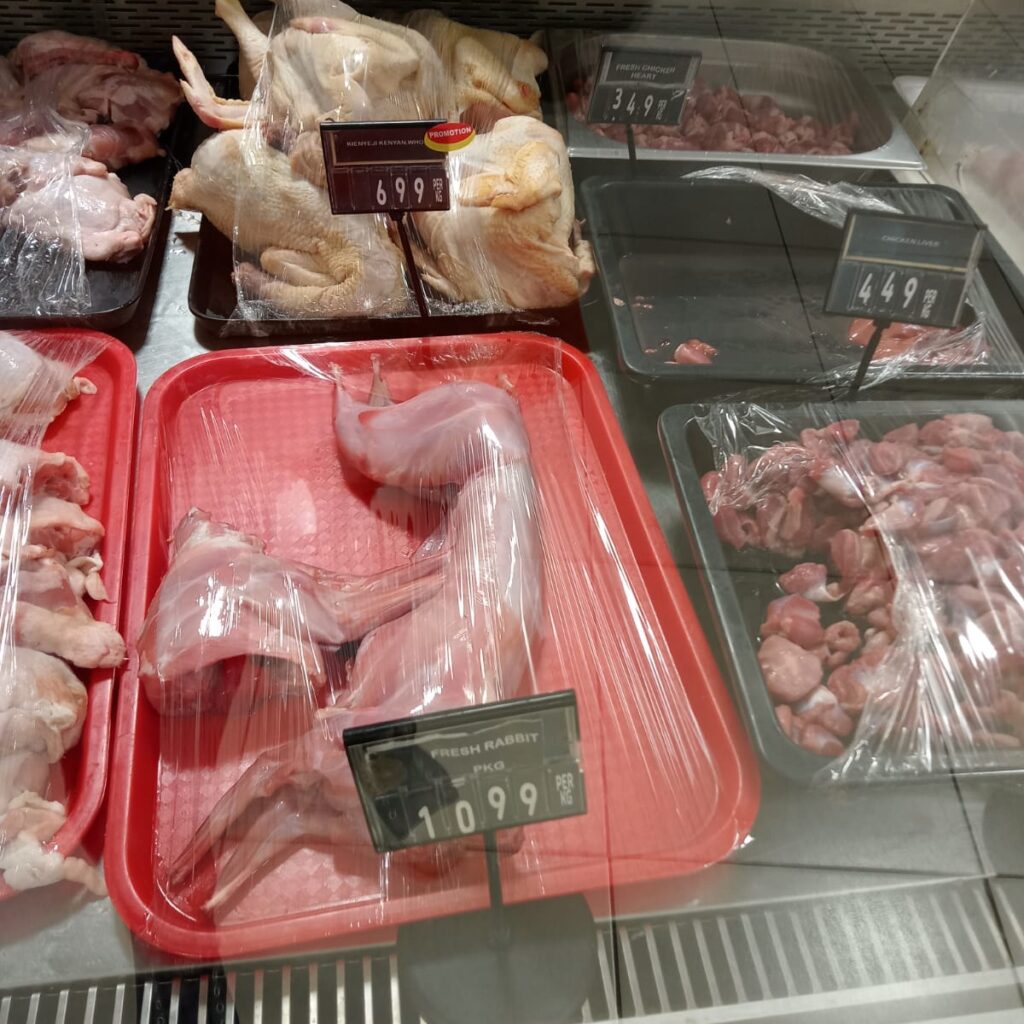
A handful of Nairobi supermarkets including some Carrefour and Naivas branches stock rabbit meat, usually frozen whole rabbit only, with availability varying by store. Expect a premium over direct farm pricing.
Nairobi open markets
Some wet markets stock rabbit meat, but quality and hygiene standards vary widely, and it’s difficult to verify breed, feed history, or processing conditions. For consistent quality and food safety, buying from a certified, traceable supplier like Rabbit Choice Farms remains the most reliable option.
Is Rabbit Meat Price Likely to Change?
Rabbit meat prices in Kenya have stayed relatively stable in recent years, with demand in Nairobi running slightly ahead of supply. As more farmers enter the sector and production scales up, farm-gate prices may ease slightly. Retail consumer prices, however, are unlikely to drop significantly the market is still maturing, and the cost of quality production sets a natural floor.
For farmers, that stability is good news: it means production economics can be planned with reasonable confidence at current price levels.
Are You a Farmer Looking for a Market for Your Rabbits?
If you raise quality hybrid rabbits and need a reliable buyer, Rabbit Choice Farms purchases directly from farmers in our network. We collect from your farm, require a minimum of 30 rabbits within Nairobi (50 outside Nairobi), and pay on the same day.
To register as a supplier or learn about our contract farming program which includes breeding stock, training, and a guaranteed buy-back arrangement call +254 715 626 955.
Frequently Asked Questions
How much is rabbit meat per kg in Kenya?
Rabbit meat retails at approximately KSh 900/kg for whole rabbit and legs at Rabbit Choice Farms. Boneless fillet is KSh 1,260/kg and mince is KSh 1,300/kg. Wholesale prices for restaurants are available on request.
How much is a whole rabbit in Kenya?
A small whole dressed rabbit (1.0–1.2 kg) costs KSh 900–1,080. A large whole dressed rabbit (1.6–2.0 kg) costs KSh 1,440–1,800 at current retail prices.
Where can I buy rabbit meat in Nairobi?
Rabbit Choice Farms delivers fresh rabbit meat across Nairobi. Order via WhatsApp on +254 715 626 955 or through our online shop. Minimum order is 5 kg.
How much do farmers get for rabbits in Kenya?
Farmers selling mature rabbits to processors typically receive KSh 300– 350 per kg of live weight. Farmers in the Rabbit Choice Farms network sell at competitive prices with same-day payment and free farm collection.
Is rabbit meat more expensive than chicken in Kenya?
Whole rabbit costs around KSh 1,080/kg, compared to KSh 1,150/kg for whole kienyeji chicken. However, rabbit is nutritionally superior higher in protein, lower in fat and cholesterol which justifies the price gap for health-conscious buyers. It’s similarly priced to quality beef and goat.
Can I buy rabbit meat online in Kenya?
Yes. Order through the Rabbit Choice Farms online shop for delivery across Nairobi, or place an order via WhatsApp on +254 715 626 955.
Rabbit Choice Farms Ltd is Kenya’s leading rabbit meat supplier fresh, hygienic, farm-to-fork rabbit meat delivered across Nairobi. Order now or call +254 715 626 955.
Everything You Need to Know About Rabbit Meat and Your Health
More Kenyans are asking a question that would have seemed unusual a decade ago: is rabbit meat healthy?
The answer, backed by decades of nutritional research, is a clear yes. Rabbit meat is one of the leanest, highest-protein meats available. It is leaner than chicken, far leaner than beef, and carries a nutritional profile that makes it genuinely suitable for people managing weight, blood pressure, diabetes, and heart disease.
In this article, we break down exactly what is in rabbit meat per 100g, compare it to other common meats, and walk through eight evidence-backed health benefits. We also cover who should exercise caution, how to get the most from it nutritionally, and where to buy fresh rabbit meat in Kenya.
What is rabbit meat?
Rabbit meat, sometimes called lapin in French and khargosh ka gosht in Hindi, is classified as white meat, in the same category as chicken and turkey. It comes from domesticated rabbits bred specifically for meat production, such as the New Zealand White and Californian breeds widely farmed in Kenya. Unlike wild rabbit, farmed rabbit is milder in flavour, consistently tender, and has a more favourable fat profile.
At Rabbit Choice Farms, all our rabbits are raised on a diet of quality pellets and hay with no hormones or additives, which directly affects the quality and nutritional value of the meat.
Rabbit meat nutrition facts (per 100g)
The figures below are based on USDA data for raw domesticated rabbit meat.
Nutrient
Rabbit (raw)
Chicken breast (raw)
Beef (raw)
Calories
136 kcal
120 kcal
250 kcal
Protein
20.1 g
22.5 g
17.3 g
Total fat
5.6 g
2.6 g
18.6 g
Saturated fat
1.7 g
0.7 g
7.4 g
Cholesterol
57 mg
64 mg
87 mg
Sodium
41 mg
74 mg
63 mg
Iron
1.6 mg
0.4 mg
1.9 mg
Potassium
330 mg
256 mg
318 mg
Carbohydrates
0 g
0 g
0 g
Sources: USDA FoodData Central; Nistor et al. (2013), Nutrient Content of Rabbit Meat as Compared to Chicken, Beef and Pork.
A few numbers stand out immediately. Rabbit has significantly less cholesterol than beef (57 mg vs. 114 mg), lower sodium than chicken, and more potassium than both. Its fat content is less than a third of beef, and it carries zero carbohydrates, making it compatible with virtually every dietary framework: low-carb, keto, diabetic, high-protein, and heart-healthy diets alike.
When cooked (roasted), protein increases to around 29g per 100g as water content reduces, making it one of the most protein-dense cooked meats available.
8 health benefits of rabbit meat, backed by science
1. Exceptionally high in lean protein
With 20g of protein per 100g raw (and up to 29-30g when cooked), rabbit meat provides a complete amino acid profile, meaning it contains all nine essential amino acids your body cannot produce on its own. Research published in a 2024 mini-review in the Nutrition and Food Science International Journal notes that rabbit meat supports muscle growth, tissue repair, and immune function, with protein digestibility exceeding 85%, which is higher than many other common meats.
For Kenyans who are active, building muscle, or recovering from illness, this makes rabbit meat a highly efficient source of dietary protein relative to its calorie cost.
2. Heart-friendly fat profile
One of rabbit meat’s most important nutritional advantages is its fat composition. Its unsaturated-to-saturated fat ratio is among the most favourable of any meat. Research published in PubMed (NCBI, 2022) found that rabbit meat’s high levels of unsaturated fatty acids, including oleic acid and linoleic acid, help reduce blood cholesterol and triglyceride levels, thereby lowering the risk of cardiovascular diseases such as coronary heart disease and hypertension.
Unlike red meat consumption, which studies have linked to central obesity and metabolic syndrome, white meat consumption is not associated with these negative cardiometabolic outcomes.
3. Supports blood pressure management
Rabbit meat contains proteins that may inhibit angiotensin-converting enzymes (ACE), the same mechanism targeted by common antihypertensive drugs such as Captopril and Lisinopril. This means rabbit meat may have a natural, mild blood-pressure-lowering effect when consumed as part of a balanced diet.
Additionally, rabbit meat is low in sodium (just 41 mg per 100g compared to 74 mg in chicken) and rich in potassium (330 mg per 100g). Potassium counteracts the blood-pressure-raising effects of sodium and plays a direct role in regulating cardiovascular function, making rabbit meat particularly well-suited for people managing hypertension.
4. Suitable for people with diabetes
Rabbit meat contains zero carbohydrates and has a glycemic index of zero, meaning it produces no spike in blood glucose or insulin levels. Research comparing white and red meats for diabetic patients consistently favours white meats like rabbit because, unlike red meat, they are not linked to increased insulin resistance or elevated oxidative stress.
A compound found in rabbit meat called conjugated linoleic fatty acid (CLA) has also shown potential anti-obesity and anti-diabetic effects in emerging research, though more studies are needed to quantify this in humans.
People managing type 2 diabetes or pre-diabetes can incorporate rabbit meat confidently as their primary protein source without concern over glycemic impact.
5. Aids weight management
Rabbit meat is low in calories (136 kcal per 100g raw) and very high in protein. High-protein diets are well established in nutritional science for their ability to promote satiety, which is the feeling of fullness, reducing overall calorie intake and helping with weight management. Because rabbit meat provides substantial protein with minimal fat and no carbohydrates, it delivers a high satiety-to-calorie ratio that few other meats can match.
For Kenyans seeking to lose weight or maintain a healthy body composition without giving up meat, rabbit is one of the most effective choices available.
6. Rich in essential B vitamins
Rabbit meat is a strong source of several B vitamins that many Kenyans may be deficient in, particularly:
Vitamin B12: Critical for red blood cell formation, neurological function, and energy metabolism. Many Africans are at risk of B12 deficiency, particularly those who reduce their red meat intake.
Vitamin B3 (Niacin): Supports energy production and DNA repair.
Vitamin B6: Important for protein metabolism and immune function.
Folate: Essential for DNA synthesis and cell division, particularly important during pregnancy.
These vitamins are not produced by the body and must come from diet. Rabbit meat delivers a meaningful contribution toward daily B vitamin requirements in a single serving.
7. A good source of key minerals
Beyond vitamins, rabbit meat provides important minerals in meaningful quantities:
Phosphorus (347 mg per 100g): Higher than in chicken, beef, or pork. Phosphorus is critical for bone health, kidney function, and energy metabolism.
Potassium (330 mg per 100g): Supports heart function and fluid balance.
Iron (1.6 mg per 100g): Contributes to haemoglobin production and helps prevent anaemia.
Selenium: A potent antioxidant mineral that protects cells from oxidative stress and supports thyroid function. Rabbit meat is notably rich in selenium.
Calcium (21.4 mg per 100g): Higher than in beef and pork, supporting bone and teeth health.
Research published in the journal Foods (NCBI, 2022) confirmed that rabbit meat has the highest concentration of phosphorus of any common meat type, making it particularly valuable for bone health.
8. Naturally low in sodium
Most Kenyans consume far more sodium than recommended, largely through processed foods, table salt, and heavily seasoned dishes. High sodium intake is directly linked to high blood pressure, heart disease, and stroke.
Rabbit meat contains just 41 mg of sodium per 100g, which is among the lowest of all meats. For this reason, nutritionists and health professionals often recommend rabbit meat specifically for children, pregnant women, and people managing hypertension. It allows you to eat well-seasoned, flavourful meals while keeping your natural sodium load from the meat itself very low.
How does rabbit meat compare to chicken and beef?
Many people consider kienyeji chicken their “healthy meat” default. Rabbit meat compares very favourably and surpasses chicken in several categories.
Rabbit has lower cholesterol than chicken (57 mg vs. 64 mg per 100g), lower sodium, and a far superior phosphorus and potassium profile. Its fat profile is richer in beneficial unsaturated fats relative to the total fat content. Against beef, the differences are even more stark: rabbit has roughly half the cholesterol, less than a third of the total fat, and far fewer calories, while still delivering comparable or superior protein.
The main nutritional difference from chicken is that rabbit has slightly more fat (5.6g vs. 2.6g per 100g raw), but that fat is predominantly unsaturated and heart-healthy. Nutritionally, rabbit and chicken are close peers, with rabbit ahead on the mineral profile and cholesterol count.
Is rabbit meat good for specific health conditions?
High blood pressure: Yes. Low sodium, high potassium, and ACE-inhibiting peptides make it one of the most blood-pressure-friendly meats available.
Diabetes: Yes. Zero carbohydrates, zero glycemic impact, and a potential CLA benefit make it an excellent choice.
Heart disease: Yes. Low saturated fat, low cholesterol, and a high proportion of beneficial unsaturated fatty acids support cardiovascular health.
Kidney disease: Moderate consumption is generally considered safe, but people with advanced kidney disease who must restrict protein and potassium should consult a doctor before making any significant dietary change.
Gout: Rabbit meat contains purines, as all meats do, but is not among the highest-purine meats. People managing gout should consume it in moderation and consult their physician.
Pregnancy: Rabbit meat is a good source of folate, B12, iron, and phosphorus, all important during pregnancy. Its low sodium content also makes it suitable for managing pregnancy-related blood pressure. As with all meats, ensure it is well cooked before eating.
Is rabbit meat red meat or white meat?
Rabbit meat is classified as white meat. Despite some cuts appearing slightly pinkish (particularly the legs, which are active muscles), it is metabolically and nutritionally categorised alongside chicken and turkey, not beef, pork, or lamb. This matters because research consistently shows white meats carry a lower cardiovascular risk profile than red meats.
Are there any risks to eating rabbit meat?
Rabbit meat is safe for the vast majority of people. A few considerations worth noting:
Alpha-gal allergy: A small percentage of people have an allergy to a sugar molecule called galactose-alpha-1,3-galactose, which is found in mammalian meats including rabbit. Symptoms such as rash, hives, and stomach pain typically appear 3 to 6 hours after eating and can range from mild to severe. This allergy is uncommon and is usually diagnosed by a doctor after unexplained reactions to meat.
Rabbit starvation: This is a historical condition caused by eating only rabbit meat with no other fat sources. It is extremely unlikely in modern diets where rabbit is one of several foods consumed. As long as you eat rabbit alongside vegetables, grains, legumes, and other foods, as most people naturally do, there is no risk.
Sourcing matters: The nutritional quality of any meat depends on how the animals were raised. Rabbits fed on quality pellets and hay, like those raised through Rabbit Choice Farms’ contract farming network, produce meat with a more consistent and favourable nutritional profile than rabbits fed on kitchen scraps or poor-quality feed.
How to get the most nutrition from rabbit meat
Cooking method affects nutrient retention. Research suggests that the fat composition of rabbit meat changes least when it is microwaved or slow-stewed compared to high-heat methods. That said, all common cooking methods preserve the protein content well.
In Kenya, rabbit is commonly prepared as a slow stew with tomatoes and spices, grilled, or roasted whole. All of these methods retain the nutritional value while delivering excellent flavour. Because rabbit meat is lean, it benefits from slower cooking methods or marinades to keep it tender and moist.
Where to buy healthy rabbit meat in Kenya
The health benefits of rabbit meat depend on quality sourcing. At Rabbit Choice Farms, we supply fresh, hygienically processed rabbit meat delivered across Nairobi and beyond. Our meat is traceable from farm to fork, raised on quality feed with no additives, and available in a range of cuts: whole rabbit, legs, fillet/boneless, and mince.
We supply households, restaurants, hotels, and bulk buyers. Orders start from 5 kg at KSh 800/kg. Call or WhatsApp us on +254 715 626 955 to place your order, or visit our shop online.
Frequently Asked Questions
Is rabbit meat good for you? Yes. Rabbit meat is high in protein, low in fat and cholesterol, rich in B vitamins and minerals, and has zero carbohydrates. It is recommended by nutritionists for people managing weight, blood pressure, diabetes, and heart health.
Is rabbit meat healthier than chicken? In most respects, they are comparable. Rabbit has lower cholesterol, lower sodium, and a richer mineral profile than chicken. Chicken has slightly less total fat. Both are excellent white meat protein sources.
Is rabbit meat high in protein? Yes. Raw rabbit provides around 20g of protein per 100g, rising to 29 to 30g when cooked. It is one of the highest-protein meats available per calorie.
Is rabbit meat good for weight loss? Yes. With just 136 calories per 100g raw, very low fat, and high protein, rabbit meat promotes satiety and supports a calorie deficit more effectively than most meats.
Is rabbit meat good for blood pressure? Yes. Its low sodium content, high potassium, and ACE-inhibiting peptides make it particularly suitable for people managing hypertension. It is recommended for children and pregnant women for the same reason.
Is rabbit meat good for diabetes? Yes. It has zero carbohydrates and a glycemic index of zero, meaning it does not raise blood glucose. It is not associated with insulin resistance, unlike red meat.
Is rabbit meat white or red meat? Rabbit meat is classified as white meat, in the same category as chicken and turkey.
Rabbit Choice Farms Ltd is Kenya’s leading rabbit farming partner and rabbit meat supplier. We supply fresh rabbit meat across Kenya and provide full support to farmers joining our contract farming network. Learn more about becoming a farmer or order rabbit meat today.
If you are eating chicken for health and beef for strength, rabbit meat gives you both, without the downside of either.
Rabbit meat delivers 33 grams of protein per 100 grams, less fat than chicken, and lower cholesterol than beef. That is not a marketing claim — it is what the nutritional data shows consistently across major food databases.
If you are evaluating proteins for your diet and rabbit meat is not on your list, you are leaving one of the cleanest animal proteins off the table.
This guide covers the full nutritional profile of rabbit meat, specific health benefits for men and women, and how it compares head-to-head with beef.
Let\s look at exactly why rabbit meat is considered one of the healthiest meats available, and why it is gaining serious ground among health-conscious eaters in Nairobi and beyond.
Order Rabbit Meat. Shop F6: Total Ruaraka, Thika Road (Next to Queen of Apostles Catholic Church), Nairobi Call / WhatsApp: +254715 626955 | +25452 683530
What Makes Rabbit Meat Uniquely Nutritious
Most lean proteins make you trade off somewhere.
Chicken is lean but lower in iron
Fish is excellent but not always accessible
Beef has iron and flavour—but carries a heavy fat load
Rabbit meat sidesteps most of those compromises.
Per 100 grams of cooked rabbit meat, you get:
33g of protein — among the highest of any common meat
3.5g of total fat — comparable to a skinless chicken breast
Only 172 calories — high protein, low energy density
82mg of cholesterol — lower than beef and pork
47mg of sodium — significantly lower than most processed meats
7.2µg of Vitamin B12 — more than twice the daily requirement in a single serving
2.3mg of iron and 263mg of phosphorus — critical for blood health and bone strength
The table below shows the full comparison between rabbit, chicken, and lean beef per 100 grams:
Is Rabbit Meat High in Cholesterol? No — Here Is the Data
This is one of the most common misconceptions about rabbit meat, and the data settles it quickly. Rabbit meat contains approximately 82mg of cholesterol per 100g. Lean beef sits at around 90mg. A chicken breast comes in at 85mg. Rabbit is at the bottom of that list, not the top.
What matters more than total cholesterol is the saturated fat content — the key dietary driver of LDL (bad) cholesterol. Rabbit meat contains just 1.0g of saturated fat per 100g. Lean beef contains 4.6g — more than four times as much.
The saturated fat in rabbit meat is on par with skinless chicken breast. For anyone managing their cardiovascular health or cholesterol levels, rabbit is one of the safest red-meat alternatives available.
Rabbit meat is also low in sodium — 47mg per 100g — which matters for blood pressure management. Most processed red meats carry three to five times that sodium load per serving.
Rabbit Meat vs Beef: Which Is Healthier?
Beef has cultural weight — it is what people default to. But if you put the two side by side on pure nutrition, rabbit wins on most metrics that matter for long-term health.
Metric (per 100g)
Rabbit
Lean Beef
Protein
33g ✓
26g
Total Fat
3.5g ✓
12g
Saturated Fat
1.0g ✓
4.6g
Cholesterol
82mg ✓
90mg
Sodium
47mg ✓
65mg
Calories
172 ✓
215
Vitamin B12
7.2µg ✓
2.0µg
Rabbit outperforms lean beef on every column above. It delivers more protein, fewer calories, far less fat, and significantly less saturated fat. If you value what beef brings to the table in terms of iron and protein, rabbit gives you both — with a much cleaner fat profile alongside.
Beef has its place. But for anyone eating meat with their health in mind, rabbit is the more disciplined choice.
Rabbit Meat Benefits for Men
Rabbit meat aligns closely with what most men are trying to achieve nutritionally — whether that is building lean muscle, maintaining a healthy weight, or simply eating better without sacrificing a satisfying meal.
Muscle Building and Recovery
At 33g of protein per 100g, rabbit meat is one of the best whole-food protein sources available for muscle synthesis. Protein drives muscle repair after training. The more complete and bioavailable the protein source, the better. Rabbit meat contains all essential amino acids, making it a complete protein comparable in quality to beef and chicken.
Testosterone and Zinc
Rabbit meat contains zinc, a mineral directly tied to healthy testosterone production. Men who are zinc-deficient often see testosterone levels fall. Regular consumption of high-zinc animal proteins like rabbit helps maintain the hormonal environment needed for energy, libido, and physical performance.
Weight Management
High protein, low fat, low calories. That combination is exactly what supports body recomposition. Losing fat while preserving or building muscle mass. For men who are watching their weight but do not want to sacrifice satiety or protein intake, rabbit meat is one of the most practical solutions on a plate.
Rabbit Meat Benefits for Women
The nutritional profile of rabbit meat addresses several health priorities that are especially relevant for women from iron to bone density to lean-body management.
Iron for Blood Health
Rabbit meat contains 2.3mg of iron per 100g. Women of reproductive age lose iron monthly through menstruation and are among the most iron-deficient populations globally. Animal-based (haem) iron found in rabbit meat is absorbed significantly more efficiently by the body than plant-based iron. Incorporating rabbit into your weekly meals is a direct, effective strategy for maintaining healthy haemoglobin levels.
Bone Health
Rabbit meat is an excellent source of phosphorus (263mg per 100g), which works alongside calcium to maintain bone density. This matters more as women age — particularly post-menopause, when bone loss accelerates. Getting phosphorus from whole food sources like rabbit meat is more effective than relying solely on supplements.
Lean Protein for Weight Management
Protein keeps you full. Rabbit meat’s combination of high protein and very low fat makes it ideal for women managing their weight without caloric restriction that leaves them hungry. You can eat a nutritionally dense, satisfying meal on far fewer calories than an equivalent portion of beef.
Vitamin B12 for Energy
B12 deficiency is surprisingly common among women, particularly those who have reduced their meat consumption. Rabbit meat contains 7.2µg of B12 per 100g — more than enough to meet the daily requirement in a single serving. B12 is essential for energy production, red blood cell formation, and neurological function.
Other Notable Health Benefits of Rabbit Meat
Heart Health
The low saturated fat and low sodium content in rabbit meat supports cardiovascular health directly. Diets high in saturated fat are associated with elevated LDL cholesterol and increased cardiovascular risk. Swapping beef or processed meats for rabbit even a few times a week reduces that burden meaningfully.
Easily Digestible
Rabbit meat has a fine-grained muscle fibre structure that makes it easier to digest than beef or lamb. This makes it a good protein option for people recovering from illness, the elderly, or anyone with a sensitive digestive system.
Suitable for Diabetics and Weight-Loss Diets
Rabbit meat is naturally low in fat and contains no carbohydrates, making it compatible with low-carb, ketogenic, diabetic, and caloric-restriction diets. The high protein content also moderates blood sugar spikes post-meal by slowing digestion.
Rabbit meat is not a niche or exotic protein — it is one of the most nutritionally efficient meats you can eat. High protein, low fat, low sodium, and rich in iron, B12, and phosphorus. The data supports it at every point.
Get Fresh Rabbit Meat in Nairobi — Choice Farms Ltd
If you are in Nairobi and want to add rabbit meat to your diet, sourcing matters. You want meat that is clean, properly processed, and traceable — not something that has passed through multiple handlers with no accountability along the way.
Choice Farms works directly with vetted local rabbit farmers across Kenya. Every rabbit is raised under monitored conditions, and the meat is processed hygienically and delivered fresh. There are no middlemen guessing at provenance — the supply chain is short and fully traceable.
Whole rabbit portions start at Ksh. 900 per kg, with full rabbit meat ranging from 1.1 to 2 kg — enough for a full family meal. We offer instant delivery within Nairobi, so the meat arrives fresh, not frozen and handled.
Whether you are buying for your household, your fitness meal prep, or your restaurant kitchen, Choice Farms is the most direct route to clean, nutritious rabbit meat in Nairobi.
Order now via WhatsApp or visit choicefarms.co.ke. Fresh rabbit meat, delivered to your door across Nairobi — starting from Ksh. 900/kg.
How to Cook Rabbit Meat (Simple Friendly Methods)
Rabbit meat is easy to prepare and fits naturally into everyday Kenyan meals. You can cook it just like chicken, with a few small adjustments because it is leaner.
1. Stewing (Best for Home Cooking)
This is the most popular method in Nairobi households.
Cook with onions, tomatoes, garlic, and ginger
Add spices such as salt, black pepper, curry powder, paprika, and a pinch of turmeric
Add a bit of oil or fat to improve flavour and texture
Simmer slowly for 40 to 60 minutes until tender
Ideal for serving with ugali, rice, or chapati.
2. Grilling (For Flavor and Texture)
Rabbit meat grills well when properly marinated.
Marinate for at least 2 to 4 hours using garlic, ginger, lemon juice, paprika, black pepper, and a little oil
Optional additions include rosemary or thyme for extra flavour
Use medium heat to avoid drying out
Turn frequently for even cooking
Great for BBQs or weekend meals.
3. Pan-Frying (Quick and Convenient)
Perfect for boneless cuts or small portions.
Season with salt, black pepper, paprika, and a little garlic
Cut into small pieces for even cooking
Use moderate heat and a bit of oil
Cook for 10 to 15 minutes until golden brown
Works well for quick weekday meals.
4. Slow Cooking (Most Tender Results)
Best for tougher cuts or whole pieces.
Cook with onions, garlic, ginger, bay leaves, and black pepper
Add broth or a tomato-based sauce to retain moisture
Optional spices include thyme, curry powder, or mixed herbs
Cook on low heat for several hours until very tender
Ideal for family meals or bulk cooking.
Pro Tips for Cooking Rabbit Meat
Rabbit is very lean, so always add a little oil, fat, or liquid
Avoid overcooking because it can become dry
Marinating improves both tenderness and flavour
Cook until the meat is fully done but still juicy
How to Store Rabbit Meat
Proper storage helps maintain freshness and safety.
Refrigerate fresh rabbit meat and use within 2 to 3 days
Freeze if storing for longer periods, it can last several months
Store in clean, airtight packaging to prevent contamination
Thaw frozen meat in the fridge, not at room temperature
Always cook thoroughly before eating
Order Rabbit Meat Online
Rabbit meat is not the future of healthy eating — it is already one of the best proteins available. Thirty-three grams of protein per 100 grams. Less fat than chicken. Less cholesterol than beef. More B12 than almost anything else on your plate. It supports muscle growth, heart health, bone density, and blood health simultaneously.
The only reason rabbit meat is not already in your fridge is familiarity. The nutrition data has been clear for decades. Try it once with a proper source — fresh, clean, and traceable — and the question of whether to eat it again answers itself.
Order Rabbit Meat. Shop F6: Total Ruaraka, Thika Road (Next to Queen of Apostles Catholic Church), Nairobi Call / WhatsApp: +254715 626955 | +25452 683530
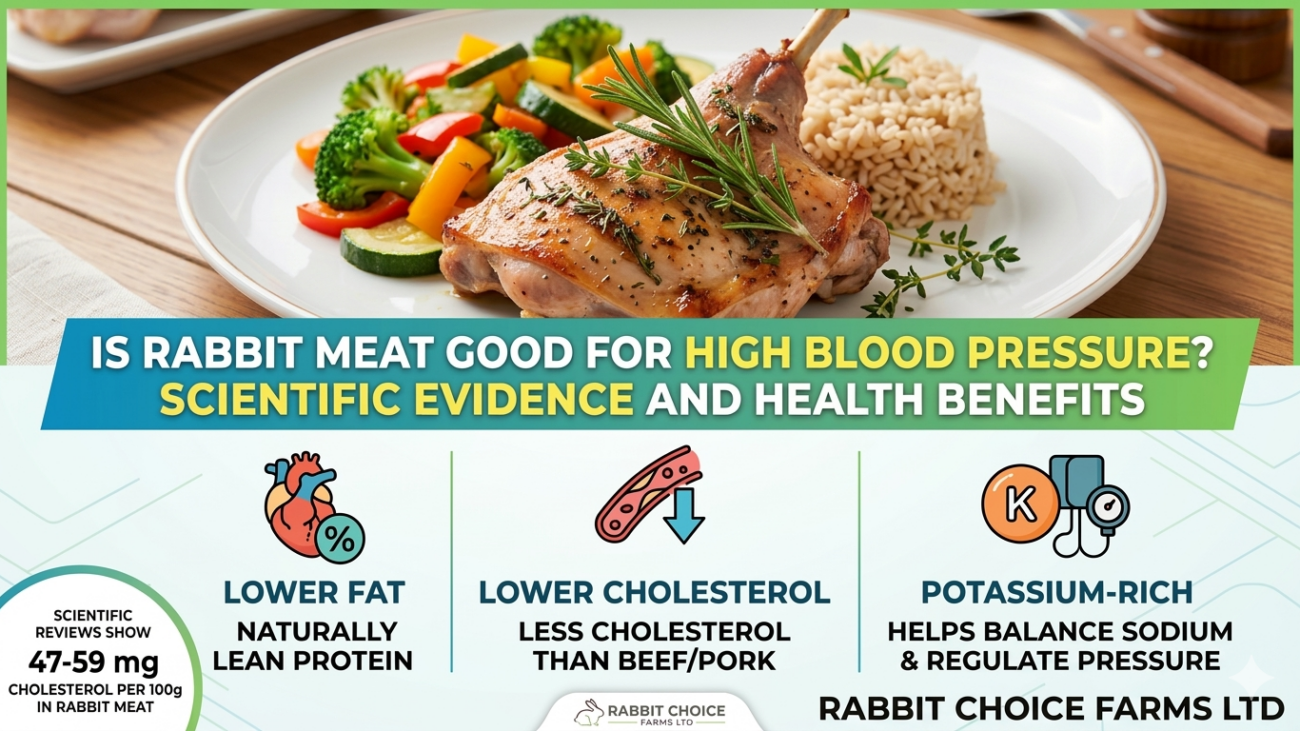
We all know a friend or family member who is dealing with high blood pressure (hypertension). The World Health Organization reports that approximatly 24%–29% among adults aged 18–69 in Kenya are affected by the condition.
One of the most effective ways to manage blood pressure is through dietary changes, especially choosing lean protein sources that contain less saturated fat and cholesterol.
Rabbit meat is increasingly being recognized by nutritionists and researchers as a healthy alternative to many traditional meats. Scientific studies show that rabbit meat has a unique nutritional profile that supports heart health, weight management, and metabolic balance.
This article examines what research says about rabbit meat and its potential benefits for people with high blood pressure, diabetes, and food sensitivities.
Why is Rabbit Meat Good for Different Medical Conditions?
What if one type of meat could fit into multiple therapeutic diets at once? Thanks to its lean protein, low sodium, and heart-friendly fat profile, rabbit meat is often considered a versatile option for people managing several medical conditions.
1. Rabbit Meat Is Naturally Low in Fat
One of the main dietary factors associated with high blood pressure and heart disease is excess saturated fat consumption.
Scientific studies show that rabbit meat is among the leanest animal protein sources available.
Research published in the Journal of Animal Production Advances found that rabbit meat contains significantly less fat than beef or pork and lower cholesterol levels than many commonly consumed meats.
Another nutrition analysis shows that rabbit meat contains about 5–6% fat per 100 g, which is considerably lower than most red meats.
Lower fat intake is important for:
maintaining healthy blood vessels
preventing cholesterol buildup in arteries
reducing cardiovascular disease risk
For people managing hypertension, replacing fatty meats with lean proteins like rabbit meat can help support better heart health.
2. Rabbit Meat Has Lower Cholesterol Compared to Many Meats
Cholesterol levels in the diet can influence the buildup of plaques in arteries, increasing the risk of hypertension and heart disease.
Scientific reviews of rabbit meat show that it contains around 47–59 mg of cholesterol per 100 g, which is lower than many other meats.
In comparison:
Beef may contain over 110 mg cholesterol per 100 g
Pork and chicken often contain higher cholesterol levels than rabbit meat.
Lower cholesterol intake helps reduce the risk of:
Atherosclerosis
Heart disease
Stroke
Because of this nutritional profile, rabbit meat is often recommended as a heart-friendly protein option.
3. Rich in Potassium – Important for Blood Pressure Control
Potassium is one of the most important minerals for regulating blood pressure.
It works by:
Balancing sodium levels in the body
Relaxing blood vessel walls
Supporting normal heart function
Rabbit meat contains about 300–350 mg of potassium per 100 g, which can help support blood pressure regulation.
Many African diets are high in salt but low in potassium. Including potassium-rich foods such as rabbit meat can help improve the sodium–potassium balance, which is essential for healthy blood pressure levels.
4. High-Quality Protein With Essential Amino Acids
Rabbit meat is also valued for its high biological value protein.
Studies show rabbit meat contains about 21% protein, providing all essential amino acids needed for body repair and growth.
High-quality protein supports:
muscle health
immune system function
healthy metabolism
weight management
Maintaining a healthy weight is particularly important for people with high blood pressure because excess weight is a major risk factor for hypertension.
Is Rabbit Meat Safe for People With Diabetes?
Yes. Rabbit meat can be a good protein choice for people living with diabetes.
No Carbohydrates
Rabbit meat contains almost zero carbohydrates, meaning it does not cause blood sugar spikes.
This makes it suitable for diabetic diets when combined with:
vegetables
whole grains
high-fiber foods
Helps Maintain Healthy Weight
Because rabbit meat is lean and high in protein, it helps people feel full longer while avoiding excess calorie intake.
Maintaining a healthy body weight is one of the most effective ways to improve blood sugar control and insulin sensitivity.
Can Rabbit Meat Be Suitable for People With Food Allergies?
Rabbit meat is often considered a hypoallergenic protein, meaning it is less likely to trigger allergic reactions compared to more common meats like beef or chicken.
Because of this, rabbit meat is sometimes included in elimination diets used by doctors and nutritionists to identify food allergies.
It may be a good option for individuals who:
Have sensitivities to common meats
Experience digestive discomfort after eating heavier meats
Need alternative protein sources
However, if you have known food allergies should consult a healthcare professional before introducing new foods into their diet.
Healthy Ways to Prepare Rabbit Meat for Blood Pressure Control
While rabbit meat itself is healthy, preparation methods matter. You want to avoid methods that add excess fats to the meal, like deep frying.
If you’re managing hypertension, the best cooking methods include: Grilling, Boiling, Stewing and Baking
It is also recommended to use natural herbs and spices instead of excessive salt, such as:
Garlic
Ginger
Rosemary
Turmeric
Black pepper
Besides improving flavor, these spices support cardiovascular health.
Get Treaceable Rabbit Meat from Rabbit Choice Farms Ltd
At Rabbit Choice Farms Ltd, we produce high-quality rabbit meat raised under proper feeding, hygiene, and welfare standards.
Our rabbit meat is ideal for:
Hotels and institutions looking to offer healthy food alternatives.
Families looking for healthier meat options
People managing heart health
Individuals seeking lean protein alternatives
We supply rabbit meat to households, restaurants, and health-conscious consumers.
To order fresh rabbit meat or inquire about deliveries, order directly on our website or contact us on 0715 626 955
We are committed to making nutritious, locally produced rabbit meat available to Kenyan consumers.
Today, consumers are becoming more health-conscious and intentional about what ends up on their plates. Rabbit meat is quickly emerging as one of the most underrated superfoods.
Often overshadowed by poultry and beef, this lean white meat should be your priority as a nutritionist, chef, fitness enthusiast, etc, for its exceptional health profile.
From its impressively high protein content to its low fat, low sodium, and cholesterol-friendly nature, rabbit meat offers a powerhouse of benefits that many people are only beginning to discover.
Whether you’re looking to boost your immune system, support heart health, build lean muscle, or simply enjoy a clean, sustainably raised source of meat, rabbit may be one of the smartest choices you can make.
Lean, high-quality protein: Great for muscle recovery and weight management.
Low fat & low cholesterol: Heart-friendly compared with many red meats.
Rich in essential amino acids, B-vitamins, and minerals (phosphorus, potassium), nutritionally dense.
Lower purine/uric acid than many meats: May be better for some people with gout risk than chicken or seafood (but see caveats).
Lower environmental footprint than beef/lamb: Efficient feed-to-meat conversion and smaller land needs.
Top Benefits of Eating Rabbit Meat
Rabbit meat isn’t just delicious, it’s a powerhouse of nutrition that can support overall health in multiple ways. From heart-friendly nutrients to easily digestible protein, here are the top benefits of adding rabbit meat to your diet.
1) Rabbit meat is a lean, high-quality protein source
One of the clearest advantages of eating rabbit meat is its protein profile.
Rabbit meat provides high biological-value protein with all essential amino acids, making it excellent for building or preserving muscle and for general nutrition.
Compared with many red meats, rabbit is often lower in total fat while delivering similar or higher protein per 100 g. This makes rabbit a good option for people aiming to increase protein intake without extra calories from fat.
2) Low fat and low cholesterol, a heart-friendly choice
Multiple analyses show rabbit meat contains substantially less fat and cholesterol than beef and pork and is comparable or lower than many poultry cuts.
That low saturated-fat profile supports heart-healthy diets and can be helpful for people managing blood cholesterol and body weight. It’s a common reason dietitians list that rabbit is a healthy meat among recommended lean protein choices.
3) Valuable vitamins and minerals
Rabbit meat is a good source of B vitamins (notably B3 and B12) and minerals like phosphorus and potassium. These nutrients are important for energy metabolism, nerve function, and bone health.
Some studies report that 100 g of rabbit meat can supply a large portion of daily B-vitamin needs.
4) Rabbit meat is low in Sodium
Sodium helps the body regulate fluids and support normal nerve and muscle function, but too much of it causes the body to retain water, which raises blood pressure.
High sodium intake is linked to hypertension and heart disease, making low-sodium foods crucial for heart health.
Lower-sodium meats reduce strain on the cardiovascular system and help maintain healthy blood pressure. Because rabbit meat is naturally low in sodium, it’s a smart choice for anyone trying to manage or prevent high blood pressure.
5) Low purine and uric acid profile — implications for gout and kidney health
Purines are natural compounds found in many foods and in your body’s cells. When the body breaks them down, they produce uric acid. Normally, uric acid dissolves in the blood and is removed by the kidneys, but when levels become too high, it forms sharp crystals that settle in the joints, causing painful gout attacks and can also strain the kidneys or contribute to kidney stones.
Several reviews report that rabbit meat has lower purine and uric-acid content than some commonly eaten meats (chicken and some seafood tend to be higher). That suggests eating rabbit meat benefits might include being a preferable animal-protein choice for people vulnerable to gout flares, though individual responses vary and overall diet matters. If you have gout or advanced kidney disease, always check with your clinician or dietitian before changing protein sources.
6) Highly digestible and suitable across ages
Highly digestible meat is easier for the body to break down and absorb, meaning you get more value from the nutrients without straining your digestive system. This is especially important for children, older adults, and anyone with sensitive digestion, as it reduces discomfort and improves nutrient uptake.
Because rabbit meat is naturally tender and highly digestible, it provides a gentle yet nutritious protein source for people of all ages.
Functional foods are foods that provide extra health benefits beyond basic nutrition, such as supporting heart health, reducing inflammation, or improving brain function.
Rabbit meat naturally contains beneficial omega fatty acids, which are linked to better heart health and lower inflammation levels. This makes rabbit meat not just a source of protein, but a functional food that can contribute to overall wellness, and it also opens the door for product innovation like omega-enriched rabbit sausages or specialized health-focused meat products.
8) Flavorful, tender, and surprisingly tasty
One of the most underrated benefits of eating rabbit meat is just how delicious and versatile it is. Many first-time customers at Rabbit Choice Farms are surprised by its flavour:
Mild and naturally sweet, similar to chicken but richer.
Tender texture when cooked gently — perfect for stews, grilling, frying, or roasting.
Absorbs spices and marinades beautifully, making it ideal for Kenyan favourites like wet fry, kienyeji-style stews, and slow-cooked dishes.
Low in fat, so it doesn’t taste greasy. Just clean, soft, high-quality meat.
Because rabbit meat adapts to almost any recipe, families can enjoy a healthier protein without sacrificing taste. It is flavourful enough for food lovers and gentle enough for kids and older adults.
This makes rabbit one of the few meats that offers both superior nutrition and superior flavour, a combination that keeps customers coming back.
Is Rabbit the Healthiest Meat?
When you combine its low fat, low sodium, high protein, high vitamin content, and easy digestibility, rabbit stands out as one of the healthiest meats available.
It delivers more nutrition per serving than many common meats while placing less strain on the heart and digestive system. For families looking to eat cleaner and live better, rabbit is an excellent addition to the menu.
Where can I buy rabbit meat?
Rabbit Choice Farms Ltd is Kenya’s premier supplier of fresh and frozen rabbit meat, serving homes, restaurants, and institutions. Our rabbits are raised hygienically and processed for top quality, tenderness, and flavour.
Order now to enjoy all the health benefits of lean, low-fat, nutrient-rich, and delicious rabbit meat. You support local farmers and treat your family to a healthier, tastier protein today.
Imagine walking into a busy Nairobi market and finding a crowd. But it’s not at the usual beef or chicken stalls. Instead, people are lining up for rabbit meat. What was once seen as a luxury for a few is now becoming a common choice for health-conscious Kenyans.
Rabbit meat is lean, packed with protein, and low in fat and cholesterol. It cooks quickly and complements many Kenyan dishes. As more people become aware of its benefits, demand continues to rise.
In fact, rabbit farming in Kenya has experienced a steady rise, with both small-scale farmers and commercial ventures seizing the opportunity. According to the Livestock Research for Rural Development (LRRD), the rabbit population has increased by nearly 427,000 in five years, and the demand for rabbit meat continues to outpace supply.
So, is rabbit farming profitable in Kenya? Yes, it can be. However, like any business, it requires effective planning and sound management. In the following sections, we will look at what makes rabbit farming a smart choice and what challenges to expect along the way.
Why Rabbit Farming is a Smart Choice
Kenya’s agricultural sector has long relied on traditional livestock farming, such as cattle, goats, and chickens. However, rabbit farming is emerging as a viable alternative for farmers looking for a cost-effective, high-yield livestock option.
Here are several reasons why rabbit farming stands out.
1. Affordable Startup Costs
Rabbit farming requires significantly less capital compared to other forms of livestock farming. You don’t need vast stretches of land. In fact, one adult rabbit only needs about 2 feet by 2 feet of space in a raised cage.
Also, feeding rabbits is relatively cheap. They thrive on pellets and locally available forages, such as hay, drastically lowering feed costs. This affordability is crucial in Kenya, where many small-scale farmers often face limited resources.
For example, setting up a rabbit farm can cost a fraction of what it would take to start a cattle or poultry farm. This is because rabbits require less space, incur fewer veterinary costs, and their housing can be constructed from inexpensive materials such as wood and wire mesh. The low startup costs allow many Kenyans to engage in farming without needing large loans or savings. Rabbit Choice Farms also assists with cage construction at affordable rates.
2. Rapid Reproduction and Growth Rates
One of the biggest advantages of rabbit farming is their ability to reproduce quickly. A single doe (female rabbit) can give birth to 6 to 10 kits (baby rabbits) per litter, and with a gestation period of just 28-32 days, a rabbit can give birth after every two months. This means a farmer can start with just a few rabbits and quickly grow their stock within a short period.
Here’s a sample production sheet over a period, starting with twenty does (mothers)
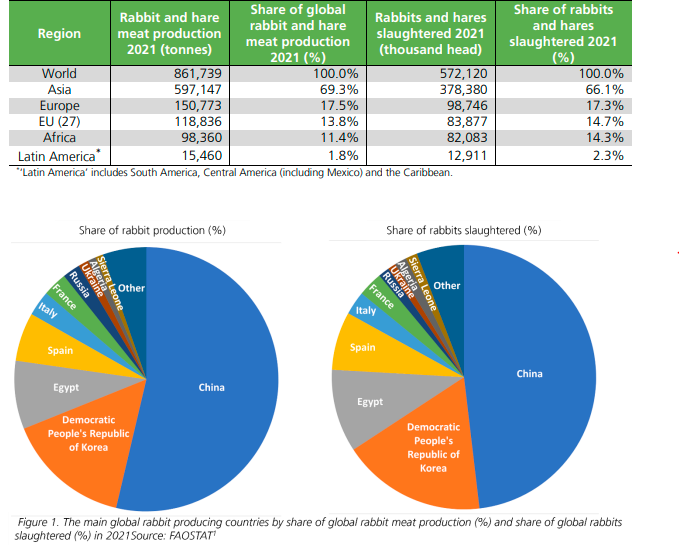
Take a look at the growing global trend in rabbit production.
Rabbits grow rapidly, reaching market weight in just 3 to 5 months. This short maturity time means that farmers can start earning returns within a few months of starting their farming operations. Compare this to cattle or goats, which may take years to reach maturity, and you’ll see why rabbit farming is such an attractive option for those looking to make profits quickly.
The fast growth rate also means farmers can harvest and sell their rabbits frequently, ensuring a steady income stream throughout the year. Additionally, because rabbits mature quickly, they allow farmers to meet market demand without long waiting periods, ensuring business continuity.
4. Increasing Demand for Rabbit Meat
The demand for rabbit meat is on the rise in Kenya, particularly in urban areas such as Nairobi, Kisumu, and Mombasa. Rabbit meat is recognized as a healthier alternative to traditional red meats, such as beef and pork, as it is lower in fat and cholesterol but higher in protein. This has made it popular among health-conscious consumers, including those looking to manage conditions like high blood pressure and heart disease.
Moreover, there is a growing awareness of the benefits of rabbit meat, with more consumers opting for lean, organic meat options. Restaurants, hotels, and supermarkets are increasingly adding rabbit dishes to their menus and shelves. This shift in consumer preference presents a good opportunity for farmers who can tap into this expanding market.
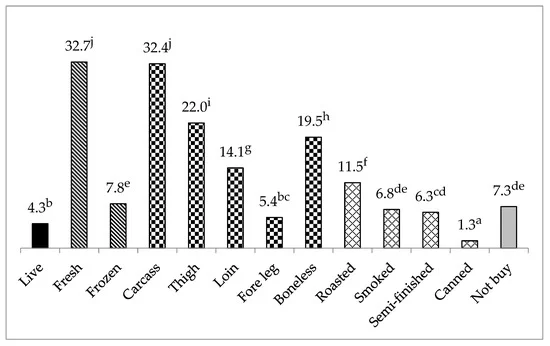
Take a look at this visual representation of the growing demand for rabbit meat and consumer buying decisions.
In Kenya, the rising middle class is also fueling demand for higher-quality and diverse food options, which include rabbit meat. The increase in disposable income among urban dwellers means people are willing to pay a premium for healthy food products. As a result, rabbit meat is gradually shedding its label as a “specialty” item and becoming more mainstream.
5. Low Competition and Growing Niche
Unlike chicken or beef farming, rabbit farming in Kenya remains relatively untapped. This means there’s less competition in the market, and rabbit farmers can enjoy better prices for their products. Because the sector is still growing, early entrants have the chance to establish themselves as market leaders, capturing a loyal customer base before the industry becomes crowded.
Many small-scale rabbit farmers report that they rarely struggle to find buyers because the demand for rabbit meat often exceeds supply. This low level of competition, paired with the growing interest in rabbit meat, offers a unique opportunity for Kenyan farmers to capitalize on a niche market.
6. Multiple Revenue Streams
Rabbit farming doesn’t just generate income through meat sales. There are several additional ways to make money from rabbit farming, which improves the profitability of the venture.
Let’s look at a few examples.
Rabbit Manure: Rabbit droppings are rich in nutrients like nitrogen, phosphorus, and potassium, making them excellent organic fertilizer. Many farmers practicing organic farming are eager to buy rabbit manure, creating an additional income stream.
Rabbit Urine: Surprisingly, rabbit urine has become a sought-after product for its use as an organic pesticide. Farmers across Kenya are using rabbit urine to protect their crops from pests, and this has created a new market for rabbit farmers to explore.
Rabbit Fur: Though still a small market in Kenya, there is potential in selling rabbit fur for use in fashion and crafting. This is especially true for breeds like the Angora rabbit, known for its soft and fluffy fur.
By diversifying income streams, rabbit farmers can maximize their profits while reducing their reliance on a single market.
Challenges in Rabbit Farming
While the benefits of rabbit farming in Kenya are numerous, it’s important to be aware of the challenges. As with any farming venture, there are obstacles that farmers must overcome to achieve success.
Here are some of the challenges.
1. Disease Management
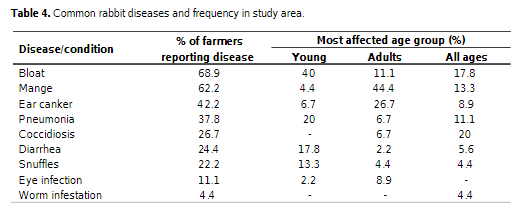
Rabbits are susceptible to a number of diseases, and disease outbreaks can wipe out an entire stock if not managed properly. The most common diseases affecting rabbits include coccidiosis, pasteurellosis, and snuffles, all of which can spread rapidly if hygiene and management practices are not up to standard.
Here’s a chat showing common rabbit diseases and their prevalence.
To mitigate these risks, rabbit farmers need to maintain clean and well-ventilated housing for their animals. Regular health checks and preventive measures, such as deworming, are crucial in ensuring the health of the herd. A strong relationship with a vet who specializes in rabbit care is also beneficial. Here at Rabbit Choice Farms, we have vetted and professional vets to safeguard the health of your herd.
2. Limited Expertise and Resources
Though rabbit farming in Kenya is growing, there is still a shortage of farming experts and veterinary services that specialize in rabbits. Many farmers struggle to find the right guidance on rabbit nutrition, breeding, and disease management, leading to suboptimal farming practices and lower productivity.
Additionally, access to quality breeding stock and reliable feed can be a challenge for farmers in rural areas. Investing in proper training and resources is essential for new and existing rabbit farmers to improve their knowledge and skills. Rabbit Choice Farms offers the best breeds and proper training on how to manage your rabbit farm.
3. Market Access
While demand for rabbit meat is increasing, not all farmers have access to markets where they can sell their produce. Farmers in rural areas may face difficulties connecting with urban buyers or retailers. Without reliable distribution channels, many farmers end up selling their rabbits at lower prices to middlemen, reducing their profit margins.
To overcome this challenge, rabbit farmers need to establish networks with restaurants, supermarkets, and hotels that are willing to buy their rabbits directly. But don’t worry. At Rabbit Choice Farms, we bridge that gap by buying rabbits from our contracted farmers and selling it in the market, so you can have the peace of mind of taking care of your herd.
Wrapping Up
So, you are concerned about whether rabbit farming is Profitable in Kenya, the answer is a resounding yes. Rabbit farming in Kenya presents a significant opportunity for those looking to engage in a low-cost, high-return agricultural venture. With growing demand for rabbit meat, low production costs, and the ability to diversify revenue streams, rabbit farming can be an incredibly profitable business.
However, like any venture, success requires careful management, proper planning, and a strong understanding of the market. By focusing on disease control, market access, and continuous learning, rabbit farmers in Kenya can position themselves to reap the benefits of this rapidly growing industry.
We can help you begin with the right breeds, training, and market support. Whether you’re just starting or want to grow your rabbit business, we’ll walk with you every step of the way.
Rabbit meat is quickly gaining popularity across Kenya, especially among people who want healthier meat options. It’s rich in protein, low in fat, and has an easy-to-prepare recipe. Whether you’re buying for your home kitchen or sourcing for a restaurant, getting clean, high-quality rabbit meat is important.
As more people begin to search for where to buy rabbit meat in Kenya, the market has opened up with a mix of suppliers, from large supermarkets to local farmers. This guide breaks down the most trusted places you can buy rabbit meat, what to expect, and why your source matters.
4 Sources to Buy Rabbit Meat in Kenya
If you’re looking to buy rabbit meat in Kenya, you have several options depending on your location, budget, and how much freshness matters to you. The key is choosing a source that prioritizes hygiene, quality, and proper handling.
Below are the most common and reliable places to source rabbit meat.
1. Direct from Rabbit Choice Farms Ltd
Getting your rabbit meat directly from a farm is one of the best ways to ensure freshness, traceability, and value for money. You know where the rabbit came from, how it was fed, and how it was processed.
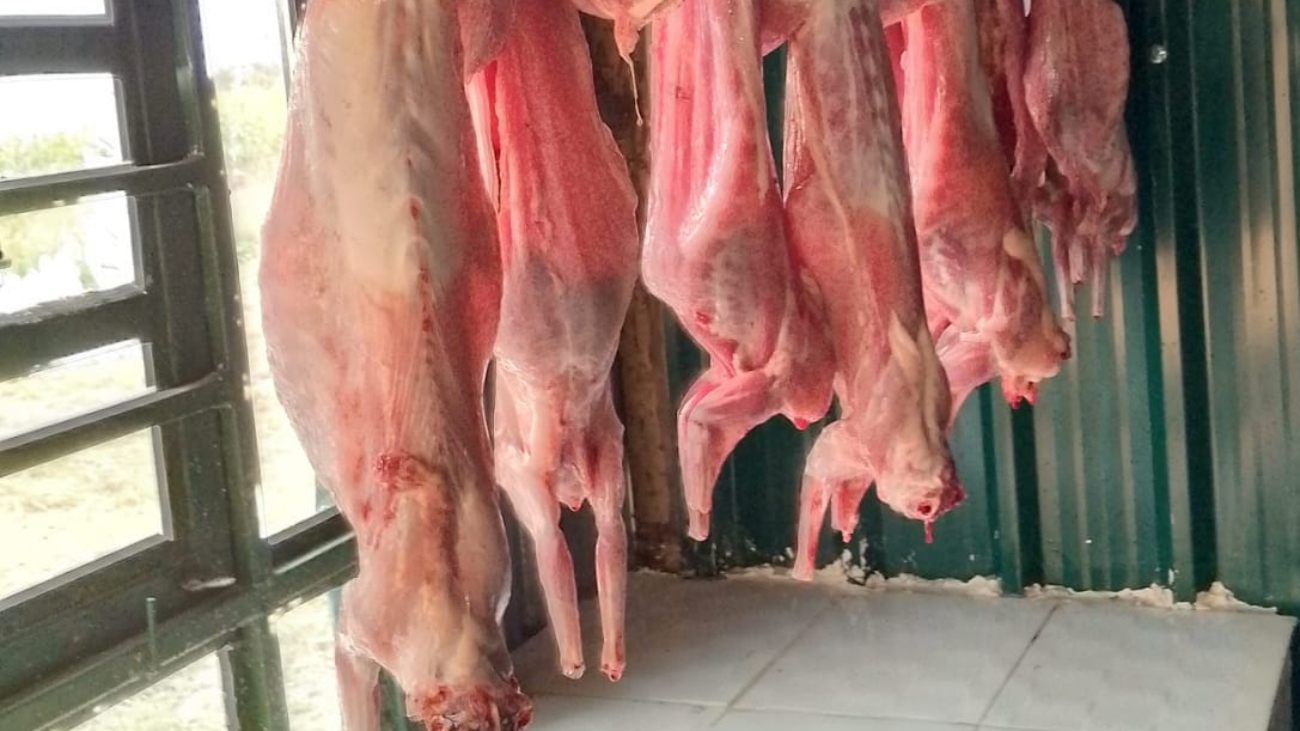
Rabbit Choice Farms is one of the most trusted suppliers of rabbit meat in Kenya. The farm runs its own modern butchery on-site, where rabbits are slaughtered under clean, professional conditions. This ensures the meat reaches you fresh and well-packaged.
On-site Rabbit Choice Farms Butchery
Prices are affordable too. At Rabbit Choice Farms, meat goes for KSh 800 per kilogram, and whole rabbits start from KSh 1,200, depending on weight and cut preferences. This is often cheaper than supermarkets, where rabbit meat prices start at around KSh 1,000 per kilogram.
To meet growing demand, Rabbit Choice Farms also contracts local rabbit farmers to supply healthy, well-raised rabbits that meet strict quality standards. This model not only supports the local farming community but also keeps supply steady without compromising on quality.
The farm also delivers rabbit meat in Nairobi and nearby towns. You can place your order on our website or through our WhatsApp number 0715626955. We have built a reputation for consistency and quality, both for household orders and bulk supply to hotels and butcheries.
Here’s what some of our customers have to say:
Other small-scale farms around Kiambu, Nakuru, and Nyeri also supply rabbit meat, but their availability may vary depending on the season and location.
2. Supermarkets
You can also buy rabbit meat from a few major supermarkets in Kenya. Most of what’s sold in these stores is frozen and pre-packed, but it’s a convenient option if you’re shopping in town.
Some supermarkets known to stock rabbit meat include:
Naivas – Found in major towns like Nairobi, Kisumu, and Nakuru
Carrefour – Branches like Westgate, The Hub, and Two Rivers sometimes stock rabbit cuts in their meat section Quickmart – Some outlets, especially in Nairobi, offer rabbit meat based on supplier availability
If you’re searching for rabbit meat near me, a quick stop at one of these supermarkets might help, although their prices are higher compared to direct sourcing from the farm. Even so, remember to check the packaging date and ensure the meat has been stored properly.
3. Local Butcheries and Pork Centres
In some towns, rabbit meat is available at butcheries and pork centers that deal in various types of meat. This option is usually more affordable and supports local farmers, but the availability is inconsistent.
You can try:
Pork centres in places like Nairobi’s Kahawa West, Nakuru town, and parts of Eldoret
City Market, Nairobi – Some vendors stock rabbit meat, especially during weekends or holidays
Local butcheries in Thika, Meru, and Embu, where farmers deliver freshly slaughtered meat on market days
Be sure to ask about the source of the meat and when it was slaughtered. If handled well, this can be a good way to get fresh rabbit meat.
4. Online Stores and Home Delivery
Buying rabbit meat online is a growing trend in Kenya. This is a good choice for people who prefer convenience and want the meat delivered straight to their home or business.
Rabbit Choice Farms also leads in this space. You can place your order on our website or through WhatsApp, and the delivery process is quick and reliable.
While some sellers also promote rabbit meat on platforms like Facebook Marketplace or Jiji, always verify their hygiene standards and delivery methods before placing an order. If you’re planning to order rabbit meat online, stick with suppliers who are known for quality and transparency.
Why the Right Supplier Matters
When it comes to meat, safety and freshness should always come first. The way a rabbit is raised and slaughtered affects both taste and health. Buying from trusted rabbit meat suppliers in Kenya gives you peace of mind. You avoid contamination, poor hygiene, and the risks that come with meat from unknown sources. Choosing a reputable supplier also helps support ethical farming practices and boosts the rabbit farming industry in Kenya.
Final Thoughts
Rabbit meat is not only healthy, but also delicious and versatile. It can be roasted, fried, stewed, or even grilled. But for the best results, always buy from a supplier you can count on.
If you’re serious about getting clean, fresh rabbit meat that’s delivered with care, Rabbit Choice Farms is a name you can trust. We’ve earned the confidence of both home cooks and restaurant owners by offering top-quality rabbit meat with great service.
Ready to try it out? Contact us today to place your order. Fresh, organic rabbit meat is just a few clicks away.
Rearing rabbits for meat has become a popular agricultural practice, particularly given the increasing demand for meat.
2021 statistics indicate that over 570 million rabbits were slaughtered globally, resulting in approximately 860,000 tons of meat. This production is valued at $1.5 billion and continues to grow annually.
Investing in rabbit rearing for meat production is thus a promising venture. To achieve optimal results, understanding the fundamentals of rabbit rearing is crucial.
In this article, we guide you through essential practices and considerations for successfully raising rabbits for meat.
Choosing the Right Breed and Stock
Although rabbits for meat are categorized as a commercial group of rabbits, you should keep in mind that not all breeds in this category are high-yielders. New Zealand White and California White are the best rabbit breeds for meat production, as they grow rapidly.
California White
New Zealand White
Other breeds, such as the Palominos, Chinchillas, and Satins, may have unique colors, but they grow slowly, requiring more time for development.
Once you’ve settled on your choice of breed, the next step is selecting your starting breeding stock. You can have a 1:3 or 1:5 ratio, meaning one buck for three does or one buck for five does. Although some farmers may recommend a higher ratio, a smaller ratio allows the bucks to have greater genetic diversity.
Let’s look at key things to consider when choosing your breeding stock.
Source from reputable breeders: Using established breeders, such as Rabbit Choice Farms, ensures thatyou obtain detailed records of the stock you are acquiring. You can even request to see the parents of the litter you want to purchase. This way, you’ll gain insights into how the young stock will look when they mature.
Check the kindling records: It’s tempting to acquire a generation with a history of producing a large litter. However, consider a doe with moderate kindling as the kits grow larger and more steadily.
Diversify your sources: If you’re starting with a large stock, consider visiting multiple breeders to ensure a diverse selection. This ensures better genetic diversity and minimizes the risk of getting stock with inbreeding and genetic flaws.
Check for thick and sturdy bones: A rabbit with thicker bones can support more muscle weight. You can run your hands gently over the rabbit as a test for protruding bones. However, keep in mind that a young rabbit may not have similar muscle development to that of a mature rabbit, and their bones might protrude somewhat.
Setting Up Housing and Equipment
This comprises cages, feeders, and waterers. Ensure you follow the proper standards to make your rabbits comfortable and to avoid contracting unnecessary diseases. Let’s look at the essentials you need in detail.
Cages
When building your rabbit cages, the factors that come into play are cost, type of materials and their availability, climate, and your skill in setting up the equipment. You will need materials like:
Wire mesh and BRC
Tape
Wire nippers
J-clips and pliers
Wooden or metal stands
Measuring tape
Galvanized sheets
Monkey wire
Once your materials are ready, start laying out the cage dimensions, including its length, width, and height. The dimensions can be customized to your liking, but they vary depending on whether the cage is intended for a doe or a buck.
Here’s a guide you can use to customize your own.
Breeding doe/ fattening cage – 30″ * 24″ * 17″
Breeding/ replacement buck- 18″ * 24″ * 17″
Flooring -1″ * 1/2″ square mesh of 14-16 gauge
Doors 15” * 15”
Floor space: 2″ x 2″ (BRC to enhance support); overlay with monkey wire.
Side and top- 3/4″ * 3/4″ wire mesh
When making your cages, ensure they are easy to clean and maintain. If you’re starting with a large stock and have limited space, you can use tier cages. However, ensure the rabbit waste from the upper cages does not fall directly into the lower cages.
Tips for constructing and maintaining your cages
Here are tips to follow when constructing and maintaining your cages.
Use materials of good quality, as they last longer, saving you the cost of unnecessary repairs.
Avoid leaving open corners where your rabbits may fall out. Ensure your wire is strong and thick so they don’t gnaw through it.
Ensure your floor is “self-cleaning” so waste can easily pass through.
Allow sufficient ventilation to prevent respiratory issues or heat stress.
Avoid leaving tight corners to avoid waste accumulation.
Feeders
You can make your feeders with locally available materials or buy them from the supply store.
Here are different designs of feeders, both commercial and DIY.
When selecting and placing your feeders, consider these valuable tips.
Feeders should be made of strong materials and securely placed
Keep them in an accessible place where the rabbits cannot urinate or defecate on them.
Place them further from the waterers so that no water gets in them.
Waterers
You can use your own materials to make the water containers or buy automatic waterers with nipples. Automatic waterers are ideal for large stocks and are mounted onto PVC piping.
Ensure they are securely placed so the rabbits do not toss them around and to avoid spillage.
Nesting Equipment
This is where a pregnant doe kindles. It is mostly made out of wood and has dimensions of 18″ * 12″ * 12″. Ensure you have a nest box for every breeding doe and thoroughly sanitize it. You can either leave it open or close it up, but keep a 2-inch lip to prevent the kits from rolling to the cage floor.
Feeding Rabbits for Meat
The most effective and easiest approach to feeding our rabbits for meat is to use commercial rabbit pellets and hay. Manufactured pellets have a complete formulation, so you won’t need to give any additional supplements, such as proteins or salt. However, ensure you source from a reputable feed company.
Since you’re doing rabbit farming for meat, resist the temptation of feeding less expensive hay grain or garden or kitchen waste. This poor-quality diet results in lower rabbit reproduction and growth. Consider quality over quantity, as this is the determining factor in getting the desired results.
With that in mind, giving your rabbits small amounts of fresh feed, such as a carrot or wilted sweet potato vines, doesn’t harm. This may help stimulate the rabbit’s appetite and promote their gentle behavior.
How Much Pellets to Feed Your Rabbits Daily
On average, 100 grams of commercial rabbit pellets per day is ideal for an adult rabbit. This amount provides enough protein, fiber, and energy for maintenance and healthy growth.
Adjustments Based on Purpose:
Growing kits (4–12 weeks): Start with 50g and gradually increase to 100g/day.
Breeding does (pregnant or nursing): 150g–200g/day to meet higher nutritional needs.
Bucks and non-breeding adults: Maintain at 100g/day.
Meat rabbits: For fast weight gain, you can increase slightly up to 120g/day, depending on the breed and pellet formulation.
Here are useful tips when feeding rabbits for meat
Feed them early mornings and late evenings
Feed rabbits wilted grass to prevent diarrhea
Give rabbits fresh pellets daily and avoid leaving them overnight to prevent attracting rats. Instead, give hay overnight.
If you need to change feeds, do it gradually over 2 weeks
Health Management of Rabbits for Meat
Rabbits do not require routine vaccination like other livestock. Proper feeding, housing, and management ensure their general health. However, note the early signs of diseases and treat them correctly.
Let’s look at some of the major rabbit diseases.
Digestive Disorders
Digestive issues are common in rabbits, particularly among newly weaned rabbits, and can lead to serious health problems if not properly managed.
Causes of digestive disorders
Irregular feeding patterns in young rabbits who are still adjusting to solid food.
Sudden diet changes, especially switching to feeds high in grains.
Coccidiosis, a parasitic infection, which can cause diarrhea and is often identified by small white spots on the liver during post-mortem.
Prevention and control
Maintain consistent feeding routines, especially for weanlings.
Avoid abrupt changes in diet; introduce new feeds gradually.
Clean cages daily to reduce the risk of infection and contamination.
At the first signs of an outbreak, administer commercial anti-coccidial medication as advised by a vet or feed supplier.
Pasteurellosis (Snuffles)
Pasteurellosis, commonly known as snuffles, is a contagious respiratory disease in rabbits that can lead to Pneumonia if left untreated.
Causes and risk factors
Overcrowded housing conditions
Poor ventilation
High ammonia levels from urine, which irritate the respiratory tract
Symptoms
Sneezing
Nasal discharge
Labored breathing in severe cases
Management and prevention:
Although there is no complete cure, antibiotics can help manage the infection.
Maintain good ventilation in rabbit housing to prevent the buildup of ammonia.
Avoid overcrowding.
Cull severely affected rabbits to prevent the spread of the disease.
Parasites in Rabbits
Rabbits are susceptible to both external and internal parasites, with mites and protozoa being the most common.
Types of parasites
Mites: Cause ear and skin mange, leading to itching, scabbing, and discomfort.
Protozoa: Cause liver coccidiosis, an internal parasitic infection that can be fatal if untreated.
Prevention and control
Maintain strict hygiene by cleaning cages and equipment regularly.
For mites, apply a few drops of oil (e.g., mineral or vegetable oil) on the affected areas to suffocate them.
Treat all adult rabbits simultaneously to prevent re-infestation.
Use commercial mite treatments or veterinarian-prescribed medications for more effective results.
Sore Hocks
Sore hocks, also known as pododermatitis, occur when the fur on the bottom of a rabbit’s feet wears away, exposing the skin to injury from wire flooring.
Causes
Little or no fur on the hocks (often genetic)
Nervous stomping behavior
Overweight rabbits placing excess pressure on their feet
Continuous contact with rough or wire flooring
Consequences
Open sores on the hocks
Risk of infection
Pain, reduced movement, and stress
Prevention and Management:
Inspect hocks regularly for early signs of irritation.
Use resting boards or mats in cages to reduce contact with wire.
Keep cages clean and dry to avoid infection.
In severe cases where infection has set in and the rabbit is suffering, culling may be necessary, as treatment is often difficult and costly.
Butchering and Processing
So, you’ve raised your rabbits well; fed them, kept them healthy, and now it’s time for the final step: butchering. While it can feel intimidating at first, once you learn the proper process, it becomes a straightforward task that ensures you get clean, quality meat.
When Is the Right Time to Slaughter?
Most rabbits for meat breeds, such as New Zealand Whites and Californians, reach slaughter weight between 12 and 16 weeks of age. At this point, they weigh around 2.5 to 3 kg, and their meat is still tender. Waiting too long means the meat becomes tougher, and they consume more feed, which cuts into your profits.
Preparing for Butchering
Here’s what to do before the actual slaughter:
Withhold feed for 12 hours beforehand. This empties their digestive system, making the process cleaner.
Make sure you have clean tools, including:
A sharp knife
Clean buckets
A hanging setup or table
Running water, if possible
Wear clean clothing and gloves to maintain hygiene.
The Slaughter Process
There are several humane methods for slaughtering rabbits for meat. One of the most common methods is:
Stun the rabbit quickly and calmly (e.g., using a blunt object or a mechanical stunner).
Hang the rabbit by its hind legs using a hook or a strong wire.
Make a swift cut to the throat or the arteries behind the jaw to bleed it out.
Once the rabbit is fully bled, begin skinning and gutting.
Skinning and Gutting
Start skinning from the hind legs, gently pulling the skin down like removing a shirt.
Carefully open the abdomen and remove internal organs.
Separate edible organs, such as the liver, kidneys, and heart, are nutritious and often sold separately.
Rinse the carcass thoroughly in clean water.
Storage and Preservation
Let the meat rest and cool in a clean container or the refrigerator before cooking or storing it for later use.
If you plan to sell, package the meat in clear, food-grade plastic bags, label it, and freeze it as soon as possible.
Conclusion
Raising rabbits for meat is a journey built on care, consistency, and smart choices. With the right breeds, proper feeding, and good housing, even a small setup can turn into a reliable source of income and food security. It’s not about rushing, it’s about learning as you go, staying committed, and growing with purpose.
At Rabbit Choice Farms, we understand that every successful farm starts with the right foundation. That’s why we offer more than just rabbits. We provide guidance, training, and ongoing support to help you achieve success. If you’re considering getting started or want to improve your current setup, we invite you to explore our Become a Farmer program.
You can also contact us today with any inquiries you may have.
Today, the demand for healthier, more sustainable food options is on the rise, and rabbit meat is gaining attention as a nutritious alternative.
But is it worth adding to your plate? Rabbit farming has deep roots in African communities, but many people are still unaware of the incredible benefits this lean, flavorful meat offers.
From its high protein content to its richness in omega-3 fatty acids, rabbit meat has a lot to offer you if you’re seeking a healthier lifestyle.
Are you a fitness enthusiast, looking to boost your diet, or simply curious about new food options? Here’s why rabbit meat could be your next favorite meal!
Rabbit meat is a superior choice compared to other meats due to its nutritional value, environmental sustainability, and affordability.
Here are some reasons why you should add rabbit meat to your weekly menu:
1.Lean Protein
Rabbit meat is an excellent source of lean protein, containing approximately 29 grams of protein per 100 grams, which is higher than that found in beef and chicken.
This makes it an ideal choice for those if you want to increase your protein intake without consuming excessive fat.
Here’s a quick table for comparison.
Meat Type
Protein per 100g (grams)
Rabbit
29 g
Chicken (breast)
24 g
Chicken (thigh)
23 g
Chicken (drumstick)
18 g
Beef (lean)
26 g
Beef (non-lean)
20-22 g
Pork (lean)
22 g
Lamb
25 g
Fish (Tilapia)
26 g
Fish (Salmon)
25 g
Source: USDA FoodData Central
2. Low Fat and Cholesterol
Rabbit meat is notably low in fat, with only about 3 grams of fat per 100 grams, and is lower in cholesterol than other meat. For instance, beef contains 10-15 grams of fat per 100 grams, while chicken stands at 6-10 grams.
This low-fat content contributes to heart health and reduces the risk of high cholesterol-related diseases, making it a heart-healthy option.
3. Essential Nutrients
In addition to being a rich protein source, rabbit meat is high in essential vitamins and minerals.
It contains significant amounts of B vitamins, particularly B12 and niacin, which are crucial for energy metabolism and red blood cell formation.
Rabbit meat also provides iron, zinc, and selenium, supporting immune function and overall health.
4. Omega-3 Fatty Acids
Rabbit meat is a good source of omega-3 fatty acids, which play a vital role in promoting cardiovascular health and supporting brain function. Compared to other meats, it contains higher levels of these healthy fats, making it an excellent choice if you want to boost your omega-3 intake.
Environmental Sustainability of Rabbit Farming
Rabbit farming is an environmentally sustainable venture. Here’s how:
5. Reduced Carbon Footprint
Rabbit farming has a lower environmental impact compared to traditional livestock farming. Rabbits produce less greenhouse gas per kilogram of meat produced, making them a more sustainable protein source.
6. Efficient Feed Conversion
Rabbits are highly efficient in converting feed into meat, requiring less feed than larger livestock to produce the same amount of meat. This efficiency contributes to lower resource consumption in rabbit farming.
7. Minimal Land Use
Rabbit farming requires significantly less land than cattle or sheep farming, making it a viable option for small-scale farmers and those with limited agricultural space. Here’s an example of innovative rabbit hutches using minimal space.
Credit: Rabbit Choice Farms Social media pages
Additionally, rabbits consume less water compared to other livestock, further enhancing their sustainability as a meat source in regions where water scarcity is a concern.
8. Rabbit Meat is Affordable
Rabbit meat is quite affordable. Retailing at Ksh. 800- 1500 per kg, making it an accessible protein source for many households.
And, buying rabbit meat is an opportunity to support local rabbit farmers, and stimulate the economy and promote sustainable agricultural practices.
9. Economic Opportunities
Companies like Rabbit Choice Farms are spearheading the growth of rabbit farming in Kenya, presenting economic opportunities for farmers, including job creation and income generation. As demand for rabbit meat increases, so does the potential for local farmers to thrive.
10. You can Cook Rabbit Meat in Diverse Ways
You can prepare your rabbit meat in various ways, including grilling, roasting, and stewing. This versatility allows you to incorporate it into numerous dishes, from Ugali, rice, chapati, matoke, and basically any meal you crave.
11. Flavor Profiles
Rabbit meat has a mild, gamey flavour that can be seasoned to suit different cuisines, making it adaptable for various recipes. It pairs well with herbs and spices, enhancing its taste in dishes from stews to gourmet presentations.
Frequently Asked Questions
How Does Rabbit Meast Taste?
Many people may have misconceptions about the taste of rabbit meat, often viewing it as unappealing. However, when properly prepared, rabbit meat is tender and flavorful, comparable to chicken and other meats.
How Are Our Rabbits Kept?
We practice excellent hygiene standards and ensure humane treatment and sustainability in rabbit production in our farms.
Where Can I Buy Rabbit Meat In Kenya?
At Rabbit Choice Farms, we supply rabbit meat in various parts of the country. Give us a call on
+254715 626955, and you’ll get your desired quantity. You can also buy rabbit meat from supermarkets like Carrefour, Naivas, etc.
Become a Rabbit Farmer
Besides eating the meat, you can also become a rabbit farmer.
At Rabbit Choice Farms, we support you every step of the way. By becoming a contracted rabbit farmer with us, you gain access to continuous guidance and support from our experienced team, ensuring you have the resources and knowledge to succeed.
Additionally, we offer a guaranteed market for your rabbits, eliminating the stress of finding buyers and allowing you to focus on what you do best—raising healthy, high-quality rabbits.

 Cart is empty