Cart is empty
How to Pick the Perfect Rabbit Breed for Meat, Growth, and Profit
Today, there’s a rising demand for white, protein-rich meat. Rabbit meat fits the bill. It’s white, low in cholesterol and tasty.
Rabbit farming is a low-cost and highly profitable venture. Compared to other livestock, rabbits require less capital to start. You don’t need expensive housing, large land, or complex equipment.
They also have low feed and space requirements. Plus, rabbit farming is easy to manage, even on a part-time basis, and can be done in urban or rural settings.
But, success in rabbit farming doesn’t start with building a hutch or buying feed—it starts with choosing the right breed. Making the wrong choice can lead to poor returns, slow growth, or even total project failure.
In this article, we’ll highlight what you should look out for when buying your rabbit breeding stock. We’ll also feature some locally available rabbit breeds and how you can get them.
Factors to Consider When Choosing a Rabbit Breed
Choosing the right rabbit breed is one of the most important decisions you can make. Different breeds are suited for different goals, climates, and production systems. Here are some factors to consider:
Farming Purpose
Are you farming for domestic consumption, commercially or for pets?
- Meat Production: If your main goal is meat, you need breeds that grow fast and yield high-quality carcasses. You’ll want to consider fast-growing breeds with an excellent meat-to-bone ratio. Examples are New Zealand White, California White, Flemish Giant, etc. Hybrid crosses (e.g., New Zealand × California) – these offer the best of both worlds and are available from Rabbit Choice Farms Kenya, already adapted to local conditions.
- Fur Production: Fur farming is not well developed in Kenya, but some breeds like the Chinchilla or Rex produce quality fur. If you’re targeting high-end export or niche markets, this might be worth exploring—but it requires specialised care and marketing.
- Pets (Niche Market): Some urban farmers are tapping into the pet market. Breeds like the Angora, Mini Rex, or Dwarf Lop are ideal. These rabbits are small, friendly, and attractive, but they are not suitable for meat production.
Growth Rate and Maturity Age
In commercial rabbit farming, time is money. The faster a rabbit reaches market weight, the more cycles you can have per year, and the quicker your return on investment.
A good breed should get to 2.5-3.5kg within 18- 22 weeks.
At Rabbit Choice Farms, we focus on fast-growing breeds and provide guidance on how to reach target weights faster through balanced feeding programs.
Litter Size and Mothering Ability
High Reproduction Rates = Higher Returns
The more kits a doe can produce per year, the more income you can generate. On average, a good doe should produce 7–10 kits per litter, give birth atleast 5 times per year.
Breeds Known for Good Mothering Instincts
- New Zealand White – consistently produces large litters and cares well for kits.
- California White – slightly smaller litters but excellent maternal instincts.
- Checkered giants- Average litters and great survival rates.
Mothering ability is crucial—poor mothers may abandon or injure kits, leading to losses.
Feed Conversion Efficiency
Feed is the largest cost in rabbit farming. Efficient breeds eat less but gain more weight, reducing production costs.
A good feed conversion ratio (FCR) means:
- Less feed per kg of weight gain
- Faster returns and higher profit margins
Most hybrids are known for excellent FCRs when raised under proper management.
Availability and Cost of Breeding Stock
It’s important to source breeding stock from a nearby, reliable farm. This reduces transport stress and costs. Buying breeders from atrusted seller heps you get the breeding line and proper health records.
Rabbit Choice Farms Ltd is based in East Africa and offers:
- Healthy, high-performing rabbits
- Delivery across the region
- Support and after-sales guidance
- Contract farming for commercial rabbit breeders.
While hybrid breeders may seem expensive, they tend to pay back faster through better performance. Hybrid crossbreeds offer the best value for money—strong genetics, fast growth and better resistance to diseases.
Best Rabbit Breeds for Farming in Africa
There are many rabbit breeds available in Africa. Here’s a list with just a few and their characteristics.

| Breed | Average Adult Weight | Key Characteristics | Specific Benefits |
| New Zealand White | 3–5 kg | White fur, red eyes, fast-growing, calm temperament | Ideal for meat production, large litters, excellent feed conversion rate |
| Flemish Giant | 3–6 kg | Very large, long body, slower growth, needs more space and feed | High meat yield, used in crossbreeding for size improvement. Low litter sizes. |
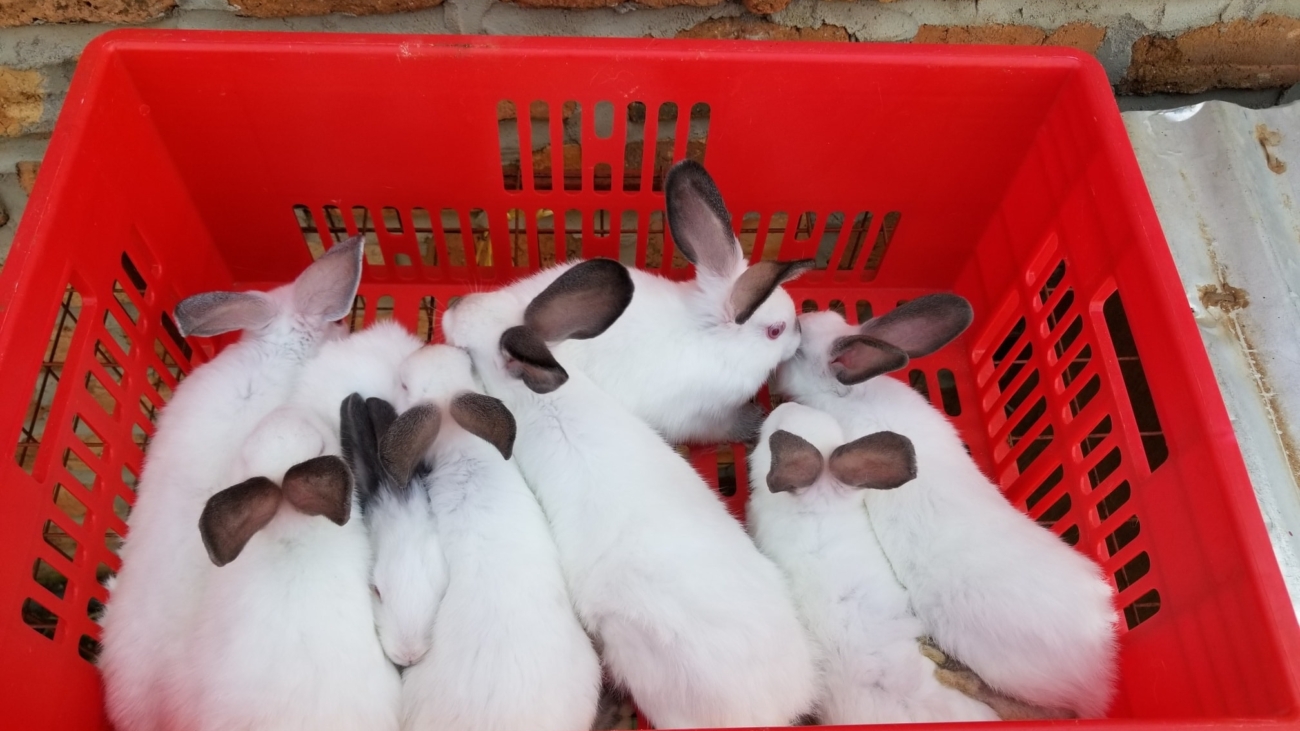
| Californian | 3.5–4.5 kg | White with black nose, ears, feet, and tail; muscular body | Excellent meat-to-bone ratio, good for crossbreeding, strong maternal instincts |
| Dutch | 2.5–3.5 kg | Small breed with distinctive color band across shoulders | Great for pet market or small-scale backyard farming |
| Palomino | 3–5.5 kg | Golden or cream coat, calm and friendly | Good for both meat and pets, docile, moderate litter size |
| Checkered Giant | 3–5kg | Large breed with white body and black markings, energetic | Good meat breed, attractive appearance, used in exhibitions |
| Angora | 2.5–4 kg | Long woolly fur, high maintenance, needs regular grooming | Pets,Fur/wool production (specialty market), soft fiber valued by handcrafters |
| Rex | 3–4.5 kg | Velvety fur, upright ears, various colors | Dual-purpose: meat and fur; attractive for pets too |
| Silver Marten | 2.5–3.5 kg | Shiny black or chocolate coat with silver markings, active breed | Popular as pets and for showing, niche market opportunities |
| Chinchilla | 3.5–4.5 kg | Soft grey fur, compact build, calm temperament | Dual-purpose: fur and meat, good litter sizes, adaptable |
| Kenya White ( Local breed) | 1.0–2.5 kg (varies) | Local hybrid, mostly white, with black eyes. | Heat-tolerant, disease-resistant, affordable. |


Mistakes to Avoid When Choosing Rabbit Breeds (And What to Do Instead)
1. Choosing Based on Appearance Over Performance
It’s tempting to pick a rabbit because it “looks nice” or has unique colours. But in rabbit farming, beauty doesn’t always mean profit.
Focus on breeds that grow fast, have high meat yield, and are known for good mothering ability.
Ask yourself: How many kilos will this breed give me in 3 months? How many kits per litter? That’s more important than coat colour.
2. Not Considering Local Environmental Conditions
Some rabbit breeds perform well in cooler climates but struggle in hot or humid regions. However, the way you construct your cages can regulate the temperature.
3. Ignoring the Source and Health of the Breeding Stock
Buying rabbits from unverified sources, roadside sellers, or friends without proper records can introduce disease and ruin your breeding goals.
Only buy breeding stock from trusted, disease-free farms with a good track record.
What to check for when buying rabbits:
- Clean eyes, nose, and ears
- No signs of diarrhea or mange
- A good body condition

Where to Buy Quality Rabbit Breeding Stock
Choosing the right rabbit breed is the foundation of a successful rabbit farming business. Whether you’re targeting meat production, breeding stock, or even the pet market, your breed choice will directly impact growth rate, profitability, and ease of management.
Factors like litter size, adaptability to the local climate, and feed efficiency should guide your decision.
At Rabbit Choice Farms Kenya Ltd, we don’t just sell you rabbits—we walk the journey with you.
We offer a contract farming model in rabbit farming designed to help you succeed with minimal risk. Here’s how it works:
- You buy quality hybrid breeders from us, specially selected for Kenyan conditions.
- We guide you in constructing the right housing for your rabbits based on your scale and location.
- You receive training on feeding, disease management, and breeding practices from our experienced team.
- Once your kits mature, we buy them back from you—giving you a guaranteed market and stable income.
This model is ideal for anyone looking to build a reliable and scalable rabbit farming business.
Ready to start? Comment below or contact us at +254715 626955.
Frequently Asked Questions
What are the common diseases that affect rabbits in Kenya, and are some breeds more resistant to them?
Rabbits are hardy when compared to other livestock like cows and chicken. But, some common diseases affecting farmed rabbits in Kenya include:
- Coccidiosis: This parasitic disease affecting the intestines and liver is a major concern, especially in young rabbits. Poor sanitation and overcrowding can exacerbate its spread.
- Ear Mites (Ear Canker): These tiny parasites infest the ear canal, causing irritation, inflammation, and crusting.
- Pneumonia: Respiratory infections, often triggered by poor ventilation, dusty environments, or stress, can lead to pneumonia.
- Bloat (Tympanites): This condition involves a build-up of gas in the digestive system and can be fatal. Dietary imbalances or sudden changes in feed can be contributing factors.
- Diarrhoea (Enteritis): Various factors, including diet, stress, and infections, can cause diarrhoea, which can be particularly dangerous in young rabbits due to dehydration.
- Snuffles (Pasteurellosis): This bacterial infection affects the upper respiratory tract, causing sneezing, nasal discharge, and sometimes eye infections.
Consistent hygiene and proper management are generally more important for preventing diseases than breed selection alone. Ensure you work closely with a vet, especially if you have a commercial farm.
What kind of housing is best for different rabbit breeds in the Kenyan climate?
The best housing in the Kenyan climate prioritizes good ventilation to prevent heat stress, along with adequate protection from direct sunlight and rainfall. Sufficient space appropriate for the breed’s size is also essential for their well-being.
What is the typical feed for farmed rabbits in Kenya, and are some breeds more efficient at converting this feed into meat?
Typical feed in Kenya includes commercial pellets supplemented with hay. Meat-producing breeds like the New Zealand White and Californian are often noted for their efficient feed conversion ratios, meaning they gain weight well on less feed.
How often do different rabbit breeds reproduce, and what is the average litter size in Kenya?
Rabbits reproduce quickly, with a gestation period of about 28-31 days, and does can have multiple litters per year. In Kenya, common meat breeds often have an average litter size ranging from 6 to 9 kits, though this can vary by breed and management.
What is the average market price for rabbit meat in Kenya, and are certain breeds preferred by consumers?
The average price for a dressed rabbit in Kenya can range from KES 750 to KES 1200, depending on location and market. Generally, consumers prioritize meatiness and size over specific breeds when purchasing rabbit meat.
Need rabbit meat? Order at least 5 kgs from Rabbit Choice Farms at Ksh. 800/Kg. Call us on +254715 626955