
 Cart is empty
The moment a doe gives birth called kindling is one of the most important, and most nerve-wracking moments in rabbit farming. Get it right, and you protect a litter of 6 to 10 kits representing months of growth and real revenue. Get it wrong, and you lose animals that were days away from a productive life on your farm.
The good news: does are competent mothers when conditions are right. Your job isn’t to manage the birth itself it’s to prepare the environment beforehand, check what needs checking afterward, and know how to respond on the rare occasions something goes wrong.
This guide walks you through it all: what to watch for in the days before kindling, what happens during birth, what to check in the first 24 hours, how to support a nursing doe, and how to handle the most common problems Kenyan farmers face at kindling time.
| Need hands-on support? Kindling and breeding management form a core part of our on-farm training program for commercial rabbit farmers. If you’re new to rabbit farming or struggling with kit losses, call or WhatsApp +254 715 626 955. |
Understanding the Rabbit Reproductive Cycle
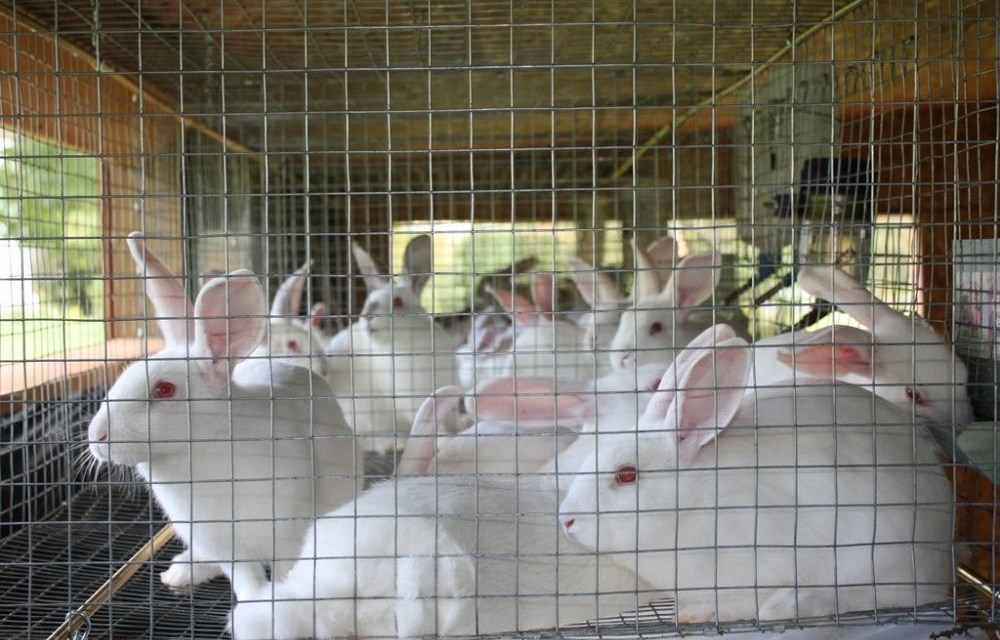
Before covering kindling itself, it helps to understand the full breeding cycle so you know what to expect and when.
| Stage | Detail |
| Gestation period | 28–31 days from mating to birth. Mark the mating date and count forward that’s your expected kindling window. |
| Litter size | Average 6–10 kits for commercial hybrids (New Zealand White and Californian crosses). Local breeds consistently produce smaller litters. |
| First kindling | Typically between 5–6 months of age. Don’t breed a doe before 4.5–5 months and 3 kg body weight breeding too young causes small litters and lasting reproductive problems. |
| Re-breeding after kindling | Safe at 2–3 weeks post-kindling, once kits are established and the doe has recovered. Earlier re-breeding stresses the doe and cuts milk production. |
Signs That Your Doe Is About to Give Birth
In the 2–3 days before kindling, a doe will show several clear behavioural changes.
Nest building
The most obvious sign. The doe pulls fur from her dewlap (the fold of skin under her chin) and belly, carrying it to a corner of the cage or into the nest box. She may also gather and rearrange hay intensively. This is a reliable sign that birth is 24–72 hours away.
Restlessness
The doe may pace, dig at the cage floor, and appear generally unsettled. She may eat and drink more or less than usual.
Visible belly movement
In the day or two before birth, you may notice slight movement in the doe’s belly as the kits reposition.
Enlarged, pink nipples
The nipples become more prominent and flushed as milk production begins commonly called “bagging up.”
| What to do at this stage • Place a nest box in the cage 2–3 days before the expected kindling date. • Fill it with clean, dry hay or wood shavings. • Ensure unlimited access to fresh water and high-quality pellets. • Check the cage is clean, dry, and free of sharp edges or gaps that could trap kits. |
If your cages aren’t built to commercial standards, this is the moment the shortcomings show. Rabbit Choice Farms builds proper commercial cages with correctly sized mesh, nest box compartments, and drainage designed to make kindling management easier from day one.
What Happens During Kindling
Rabbit births happen quickly, usually within 15 to 30 minutes for the entire litter. Female rabbits typically give birth in the early morning hours before sunrise. In most cases, you won’t witness the birth at all, and that’s perfectly normal.
- Do not intervene during the birth: A doe disturbed during kindling can become stressed and, in rare cases, abandon the litter or injure kits. Unless there is a clear emergency the doe in obvious distress for more than an hour with no kits born leave her completely alone.
- Is blood normal? Yes. A small amount of blood and birth fluid in the nest box after kindling is normal. A large amount of fresh blood pooling in the cage (not just staining in the nest) is a concern and warrants a call to a vet.
- Stillborn kits- It’s normal for one or two kits in a litter to be stillborn. This does not indicate a problem with the doe or with the birth overall.
The 24-Hour Check: What to Do After A Rabbit Gives Birth
This is the single most important step for reducing kit losses. Perform it quietly and quickly, ideally 2 to 6 hours after you discover the doe has kindled.
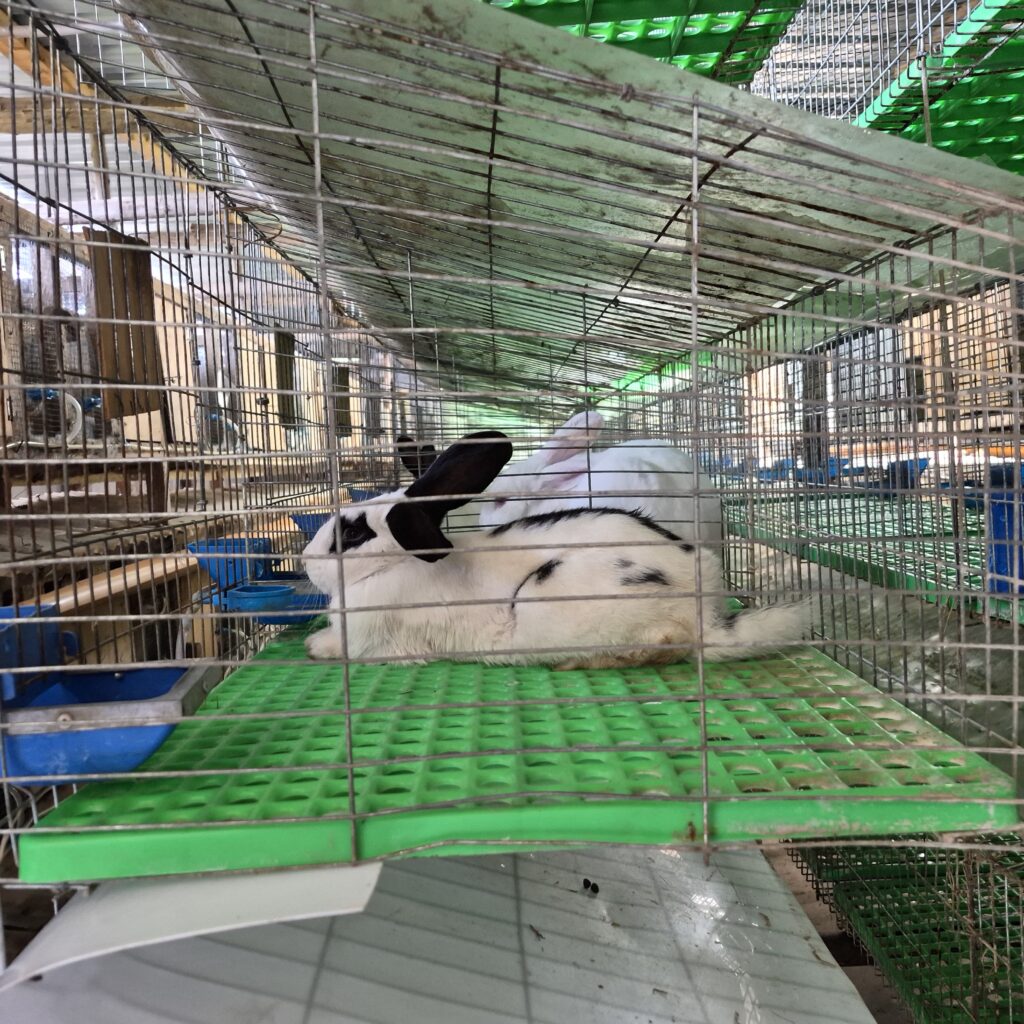
- Check the nest box calmly. Approach without sudden movements or noise. If the doe is calm, gently move her to the other side of the cage, or offer a small piece of feed to occupy her attention while you look.
- Count the kits. Note the number for your farm records. If the count doesn’t match a previous pregnancy, some kits may be hidden under the fur.
- Remove any stillborn kits immediately. Left in the nest, they attract flies and cause bacterial contamination that harms live kits. Remove any that are cold, not breathing, and without pink colour dispose of them away from the rabbitry.
- Check that all live kits are in the nest. Occasionally a kit is born outside the nest box. A kit left outside in cold conditions for even a few hours may become chilled and unresponsive check the cage floor and corners.
- Check that kits look healthy. Healthy newborn kits are pink, plump, and squirming, with round, slightly full bellies. Thin, wrinkled, or cold kits either aren’t being nursed or were born with problems.
- Ensure the doe has water and food. A doe that has just kindled has an enormous need for water without it she cannot produce adequate milk. Check the water supply is full and clean, and provide unlimited pellets and hay.
- Leave the doe and nest alone. After this initial check, don’t disturb them for 24–48 hours. Constant checking stresses the doe and can cause her to abandon the litter.
| What to do with a chilled kit Place the kit in your cupped hands and breathe warm air on it, or hold it against your skin under your clothing for 10–15 minutes. If it warms and begins to wriggle, return it to the nest box immediately. If there’s no response after 20 minutes of warming, it’s unlikely to survive. |
How to Know If the Doe Is Nursing
Kits nurse only once or twice a day, usually at night or in the early morning. Because nursing happens so briefly and after dark, you’ll rarely see it don’t assume the doe isn’t nursing just because you haven’t observed it.
Signs to show rabbit kits are being nursed (check at 48 hours)
- Warm and round-bellied, not wrinkled or thin
- Quiet and sleeping in a pile — unfed kits cry continuously with a high-pitched squeal
- Gaining weight — if weighed, heavier at 48 hours than at birth
Signs that rabbit kits are not being nursed
- Thin, wrinkled, loose-looking skin
- Constant squealing that doesn’t stop
- Cold body temperature
- Weight loss, if tracked
If you’re confident the doe isn’t nursing after 48 hours, contact a vet or an experienced rabbit farmer. It’s possible though rare to hand-nurse kits with a 1 ml syringe and commercial kitten milk replacer, but survival rates for hand-reared kits are low without significant experience and commitment. Our training program covers nursing failure, assisted nursing, and when to intervene.
Common Kindling Problems and What to Do
1. The doe ignores the kits
Some does especially first-time mothers appear to ignore the kits in the first hours after kindling. This is often normal: she may nurse at night while you’re not watching. Give her 48 hours before concluding she has rejected the litter.
If, after 48 hours, the kits are clearly unfed (thin, wrinkled, squealing), try placing the doe gently on top of the nest for 5 minutes and holding her calmly in position while the kits nurse. Some first-time does need a few assisted sessions before they take over independently.
2. The doe eats the kits (infanticide)
Distressing to discover, and more common than most farmers expect. Rabbit infanticide is usually caused by one of the following all preventable:
- Extreme stress during or after kindling (noise, predators nearby, frequent disturbance) — keep the rabbitry calm and quiet, particularly in the 24 hours around kindling.
- Pain or illness in the doe — check for mastitis (swollen, hot mammary glands) or other health issues.
- First-time mothers — some does improve with subsequent litters. Record infanticide events and consider removing chronic offenders from the breeding program.
- Severe nutritional deficiency — a doe severely short of protein or water may eat kits as a survival response. Ensure adequate nutrition throughout pregnancy.
3. Bleeding after giving birth
A small amount of bleeding and discharge in the hours after kindling is normal. Continued heavy bleeding fresh red blood pooling in the cage, not just staining on nest material beyond 2–3 hours after birth is abnormal and requires veterinary attention. Call your vet immediately.
4. Kits born outside the nest box
Collect them quickly and warm them before returning to the nest. Ensure the nest box is easily accessible and well positioned. Some does kindle outside the box if it was placed too late, is uncomfortable, or the doe wasn’t given enough nesting material.
5. Very small litter (1–3 kits)
A small first litter from a young doe isn’t unusual. If a mature doe consistently produces litters of fewer than 4 kits, review her nutrition and health, or replace her with a more productive animal in your next breeding cycle. Keep records this is one of the clearest signs your breeding stock may not suit commercial production.
Our hybrid breeders are selected specifically for large, consistent litters and delivered countrywide. Replacing underperforming does with proven hybrid stock is one of the fastest ways to improve farm output without changing anything else.
Managing the Nest Box After Kindling
Leave the nest box in the cage until the kits are 3 weeks old and beginning to venture out on their own. At that point, remove it and clean it for the next use.
Clean and disinfect the nest box between litters a dirty box is a source of coccidiosis and other diseases that pass from one litter to the next. Scrub with a 1:10 bleach solution, rinse well, and allow it to dry completely before reuse.
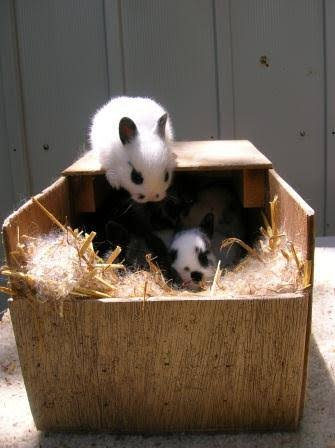
Image courtesy-Nature trail
Weaning Your Rabbits: When and How
Kits are weaned at 4–5 weeks of age simply meaning separated from the doe.
Move the doe to a clean cage (or back to her original cage if the kits have been in a grow-out cage). Leave the kits together in the familiar cage where possible moving them to a completely new environment at weaning adds stress to an already stressful transition.
On the day of weaning, begin the anticoccidial medication protocol immediately. This is the highest-risk window for coccidiosis in young rabbits: the protection of the mother’s milk is gone, the immune system is under separation stress, and any coccidia in the cage will be picked up fast. Give amprolium in the drinking water for 5 consecutive days starting the same day you wean the kits.
After weaning, kits enter the grow-out phase, where feed management and housing quality determine how quickly they reach the 3–4 kg market weight that commercial buyers like Rabbit Choice Farms require.
Record Keeping: The Habit That Separates Successful Farmers
Every kindling event should be recorded. Successful commercial rabbit farmers in Kenya maintain a simple record card for each doe tracking:
- Mating date
- Expected kindling date
- Actual kindling date
- Number of kits born (live and stillborn)
- Number of kits at weaning (your pre-weaning loss rate)
- Number of kits reaching market weight
Over time, this data tells you which does are your most productive animals to retain and breed from, and which are underperforming and due for replacement. It also helps you anticipate kindling dates and prepare in advance, reducing losses from unplanned births.
This discipline is also what separates farmers who can accurately calculate their profit from those who guess. Farmers in our contract farming program receive a simple farm record template as part of onboarding, along with ongoing support reading the numbers and improving performance over time.
How Rabbit Choice Farms Ltd Supports You at Every Stage
Kindling management is just one part of running a successful commercial rabbit farm. At Rabbit Choice Farms Ltd, we support farmers through every stage of the journey.
Training on commercial rabbit farming
Our on-farm training and disease management program covers the full production cycle: breeding management, mating protocols, kindling and kit care, weaning, anticoccidial programs, disease prevention and treatment (coccidiosis, snuffles, worms, sore hocks, mastitis), feed management, record keeping, and how to meet commercial buyer standards. Training is open to both new farmers joining our network and experienced farmers improving an existing operation.
Quality hybrid breeding stock, delivered countrywide
The size and health of every litter starts with the genetics of your breeding stock. Our hybrid breeders New Zealand White, Californian White, Flemish Giant crosses, and NZW x Californian hybrids are selected for large, consistent litters, fast growth to market weight, and proven performance in Kenyan conditions. We deliver countrywide: Nairobi, Nakuru, Kisumu, Eldoret, Mombasa, or any rural county.
Hutch construction built for kindling management
A well-designed cage makes kindling easier, safer for the kits, and less stressful for the doe. We build commercial wire mesh cages with correctly sized mesh floors, integrated or removable nest box compartments, and the drainage and ventilation specifications that support healthy kindling and low kit mortality.
Guaranteed buy-back through contract farming
All the effort that goes into managing kindling, raising kits, and weaning batches successfully leads to one outcome: marketable rabbits at 3–4 kg. Through our contract farming program, we commit to purchasing your mature rabbits at agreed prices, with direct farm collection and same-day payment. No middlemen, no price uncertainty, no transport burden.
| Get started Call or WhatsApp +254 715 626 955 / +254 762 688 055 to ask about training dates, breeding stock availability, hutch construction, or joining our contract farming program. |
Frequently Asked Questions
How long does a rabbit take to give birth?
The entire kindling process usually takes 15–30 minutes. Most does kindle in the early morning before sunrise. Don’t intervene unless the doe has been in obvious distress for more than one hour with no kits born.
How many kits does a rabbit have?
Commercial hybrid does typically produce 6–10 kits per litter. First litters from young does may be smaller (2–5 kits), improving with subsequent pregnancies up to the doe’s productive peak. Local breeds produce significantly smaller litters than commercial hybrids one of the main reasons they’re not recommended for commercial production.
What do I do when my rabbit gives birth for the first time?
Prepare the nest box 2–3 days before the expected date, ensure unlimited water and feed, and don’t disturb the doe during or immediately after birth. Perform a quiet 24-hour check to count kits, remove any stillborn, and return chilled kits to the nest.
Is it normal for a rabbit to bleed after giving birth?
A small amount of blood and discharge is normal. Heavy or continued bright red bleeding beyond 2–3 hours after birth requires veterinary attention.
How do I know if my rabbit has finished giving birth?
A doe that has finished kindling will typically clean herself, settle calmly, and either rest, feed, or drink. If she is actively straining or appears distressed more than 30 minutes after the last kit was born, contact a vet.
When can I breed my doe again after she gives birth?
Safely re-breed 3–4 weeks after kindling. Earlier re-breeding stresses the doe and reduces milk production for the current litter.
What do I do with a rabbit that eats her kits?
Identify and address the cause first stress, pain, or nutritional deficiency. Give a first-time doe a second chance. If the same doe repeatedly eats her kits with no identifiable cause, remove her from the breeding program and replace her with a more reliable animal.
Where can I get training on rabbit kindling and breeding management in Kenya?
Rabbit Choice Farms runs on-farm training covering kindling, breeding, disease management, feeding, and record keeping. Call +254 715 626 955 to find out about upcoming training dates.
Rabbit Choice Farms Ltd provides on-farm training, quality hybrid breeding stock delivered countrywide, hutch construction, and a guaranteed buy-back market through our contract farming program.
Become a partner farmer visit our office on Thika Road, Total Ruaraka in Nairobi


Add a Comment